


What's Happening?
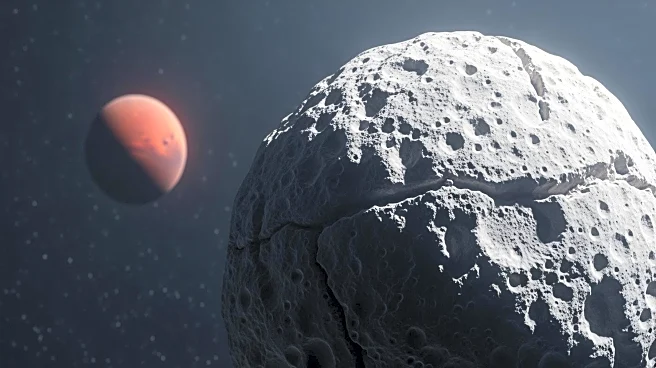
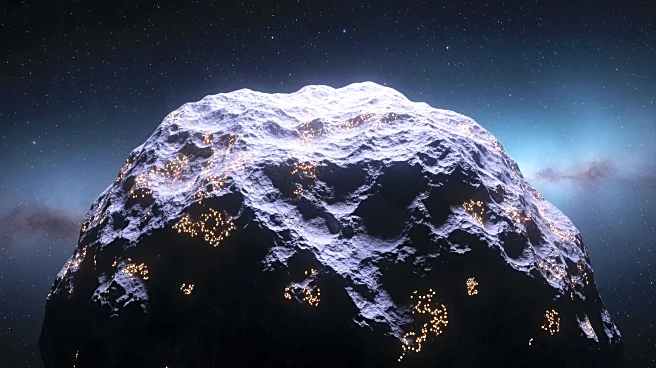
A new study published in PNAS Nexus explores the possibility of life traveling between planets via asteroid impacts. Researchers tested the extremophile bacterium Deinococcus radiodurans, known for its resilience to extreme conditions, by simulating the pressures
of an asteroid impact. The bacterium survived pressures up to 2.4 Gigapascals, suggesting it could endure the journey from one planet to another. This finding supports the panspermia hypothesis, which posits that life can spread across planets through space debris. The study highlights the bacterium's ability to withstand conditions similar to those on Mars, raising questions about the potential for life to exist on other planets.
Why It's Important?
The study's findings have significant implications for our understanding of life's potential to spread across the solar system. If microorganisms can survive the harsh conditions of space travel, it suggests that life on Earth could have originated from elsewhere in the universe. This research also impacts planetary protection protocols, as it raises concerns about contaminating other planets with Earth-based microbes during space missions. The study underscores the need for careful consideration of microbial survival in space exploration and the potential for life beyond Earth.
What's Next?
Further research is needed to explore the full implications of the panspermia hypothesis and the potential for life to travel between planets. Scientists may conduct additional experiments to test other extremophiles and simulate different space travel conditions. The study also prompts a reevaluation of planetary protection measures to prevent cross-contamination during space missions. As space exploration advances, understanding the resilience of microorganisms in space will be crucial for future missions to Mars and beyond.