








What's Happening?
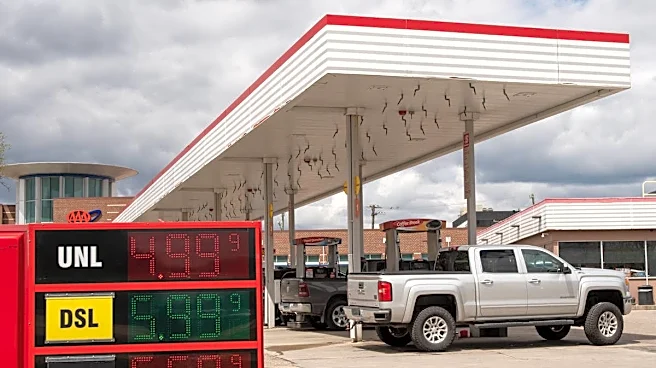
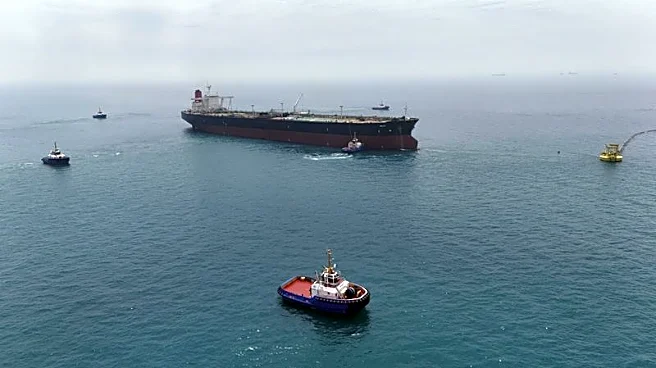
Oil prices have fallen by more than $1 as investors focus on the resumption of crude flows through the Strait of Hormuz and progress in U.S.-Iran peace talks. Brent crude futures and U.S. West Texas Intermediate both experienced declines, reflecting eased
disruption risks in the Gulf. The U.S. has granted Iran a 60-day sanctions waiver, contributing to the improved outlook for oil supply. However, geopolitical risks persist, with ongoing tensions in the Middle East, including incidents involving Lebanon's Hezbollah and Israeli forces.
Why It's Important?
The easing of tensions in the Strait of Hormuz and the potential for improved U.S.-Iran relations could stabilize global oil markets, reducing volatility and uncertainty. The resumption of oil flows through this critical chokepoint is crucial for maintaining global energy supply and preventing price spikes. However, the situation remains fragile, with geopolitical risks continuing to pose challenges. The developments highlight the interconnectedness of global energy markets and the impact of diplomatic efforts on commodity prices.
What's Next?
The continuation of U.S.-Iran peace talks and the management of shipping activities in the Strait of Hormuz will be key factors influencing oil market dynamics. Investors and energy companies will closely monitor these developments, as any setbacks could lead to renewed volatility. Additionally, the geopolitical landscape in the Middle East will remain a critical area of focus, with potential implications for energy security and international relations. The situation underscores the importance of diplomatic engagement in addressing global energy challenges.