






What's Happening?
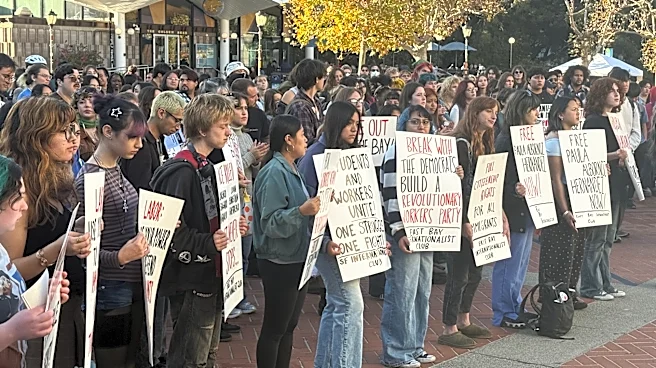
U.S. Representative Lateefah Simon is among several elected officials and community leaders who have submitted letters of support for Paula Albornoz Hernandez, a UC Berkeley student detained by immigration authorities. The UC Berkeley campus community has
mobilized to support Hernandez, with campus leaders initiating protocols to connect her family with legal support and ensuring flexible academic arrangements. The Government and Community Relations team has also engaged with U.S. Senator Alex Padilla’s office to initiate congressional casework and seek information from federal immigration authorities regarding Hernandez's status. A bond hearing has been scheduled for Hernandez, where she will be represented by a partner from the East Bay Community Law Center.
Why It's Important?
The involvement of U.S. Representative Lateefah Simon and other high-profile officials in supporting a detained student highlights the significant impact of immigration enforcement on individuals and academic communities. This case underscores the ongoing challenges faced by undocumented students and the broader immigrant population in the U.S. The collective advocacy from federal, state, and local leaders, as well as university representatives, demonstrates a strong commitment to protecting students and upholding humanitarian values within educational institutions. This support can provide a critical lifeline for individuals facing deportation and may influence future policies regarding the treatment of students with precarious immigration statuses, potentially setting a precedent for how universities and elected officials respond to similar situations.
What's Next?
The immediate next step is the scheduled bond hearing for Paula Albornoz Hernandez, where legal representation will aim to secure her release. The ongoing engagement of U.S. Senator Alex Padilla’s office and other elected officials suggests continued pressure on federal immigration authorities for information and a favorable resolution. This case may also prompt further discussions and actions within UC Berkeley and other universities to strengthen support systems and legal resources for undocumented students. Additionally, it could contribute to broader advocacy efforts for immigration reform, particularly concerning protections for students and individuals integrated into American communities, potentially influencing legislative debates on immigration policy.
Beyond the Headlines
This incident brings to light the complex interplay between immigration law, higher education, and civil liberties. The detention of a university student, despite community and political support, underscores the often-unyielding nature of immigration enforcement. It also highlights the ethical and moral responsibilities of educational institutions to protect their students, regardless of immigration status. The case could spark deeper conversations about the role of universities as sanctuaries and the extent to which local and federal authorities should cooperate on immigration matters. Furthermore, it may galvanize student activism and community organizing around immigrant rights, fostering a more robust network of support and advocacy for those affected by immigration policies.