





What's Happening?
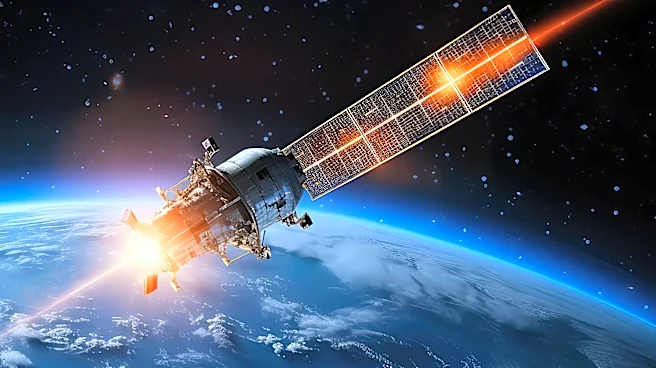
Lockheed Martin has outlined a new missile-defense architecture that integrates the F-35 Lightning II as a key airborne tracking and targeting node. This system connects space-based sensors, command networks, and interceptors to improve the speed and accuracy
of missile defense operations. The F-35's role is to provide additional tracking and targeting data, enhancing the overall situational awareness and response capabilities of U.S. forces. This approach aims to compress the time between detection and engagement, crucial for countering fast-moving threats such as ballistic, cruise, and hypersonic missiles.
Why It's Important?
The integration of the F-35 into the missile defense network represents a significant advancement in U.S. military capabilities. By enhancing the connectivity between sensors and interceptors, the U.S. can respond more effectively to complex and multi-axis attacks. This development underscores the importance of a coordinated defense strategy that leverages advanced technology to maintain national security. The F-35's expanded role also highlights the shift towards architecture-centric warfare, where the value of individual platforms is measured by their ability to enhance the overall combat power of the force.
Beyond the Headlines
This development reflects a broader trend in modern warfare, where the integration of advanced technologies and systems is crucial for maintaining a strategic advantage. The F-35's role as a mobile information node demonstrates the importance of flexibility and adaptability in military operations. The ability to rapidly share and process information across domains is becoming increasingly vital in a contested battlespace. This approach not only enhances the effectiveness of missile defense but also strengthens the resilience of U.S. military operations against evolving threats.