

What's Happening?
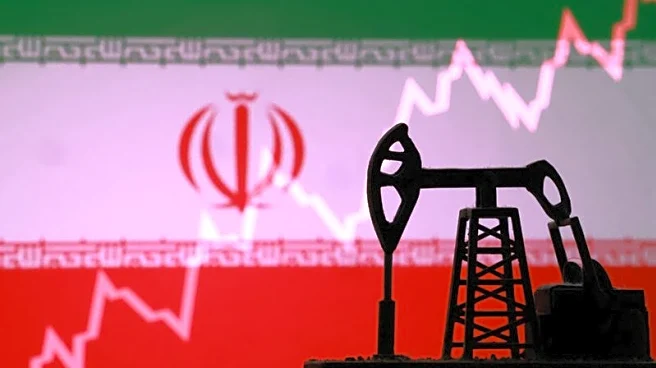
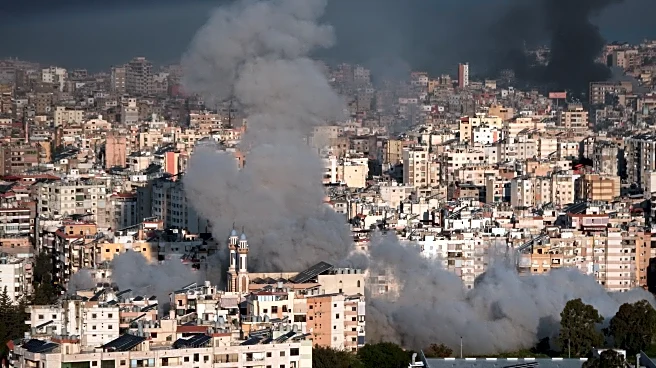
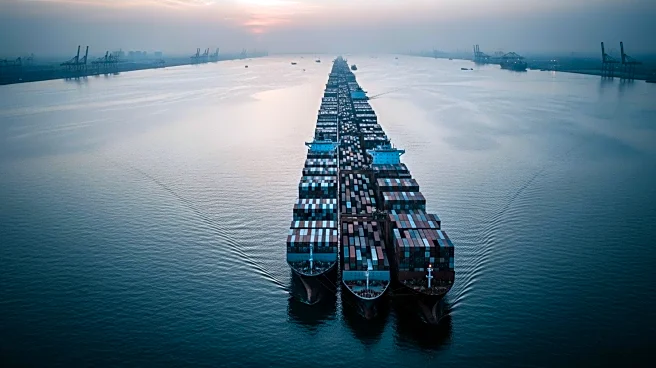
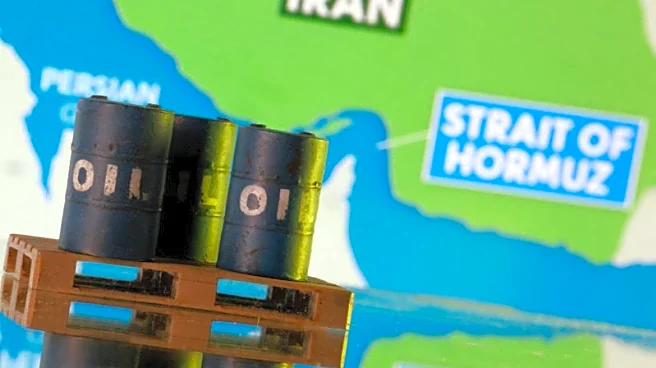
Approximately 10% of the global container ship fleet is currently stuck in the Strait of Hormuz due to the ongoing conflict between the United States, Israel, and Iran. The closure of the strait, a critical chokepoint for global oil and gas shipments,
has led to significant disruptions in maritime traffic. Maritime insurers have ceased covering voyages through the strait, and major shipping companies have halted bookings to the Middle East. The situation has caused a backlog of cargo in key ports across Europe and Asia, with industry experts warning of potential spikes in oil prices if the closure persists.
Why It's Important?
The blockage of the Strait of Hormuz has far-reaching implications for global trade and energy markets. As a vital passage for a significant portion of the world's oil supply, any prolonged disruption could lead to increased energy prices and economic instability. The situation also highlights the vulnerability of global supply chains to geopolitical tensions, prompting businesses to reassess their risk management strategies. The impact on shipping companies and insurers could lead to changes in maritime insurance policies and increased costs for global trade.