



What's Happening?
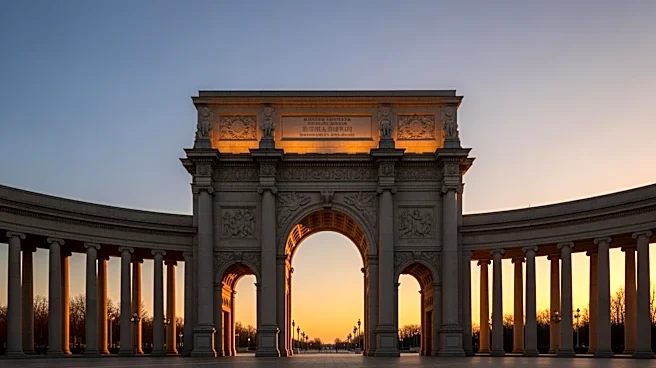
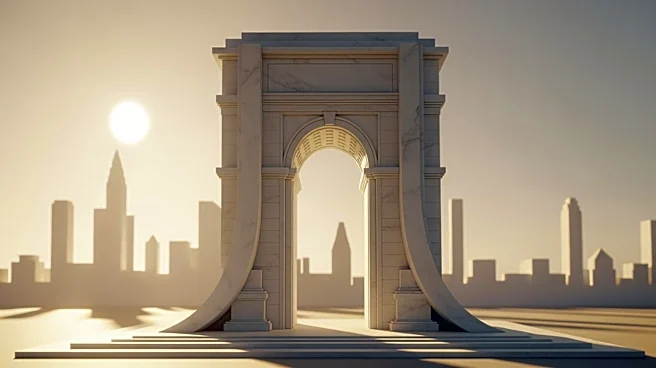
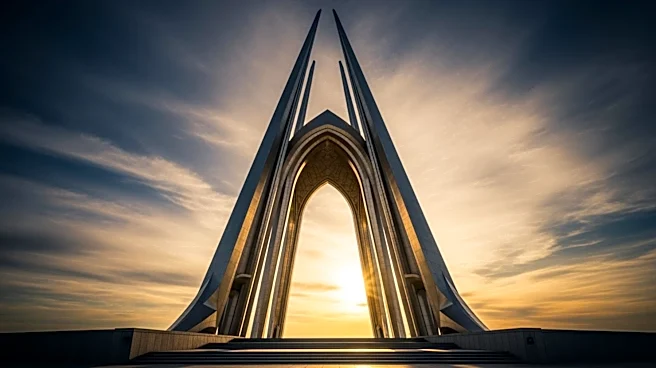
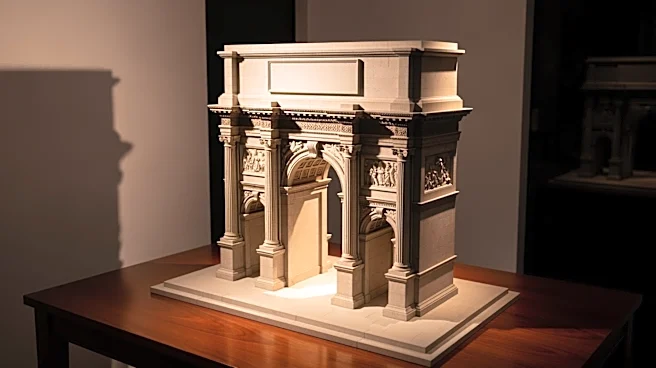
President Trump has confirmed that plans for a 76-meter (250-foot) triumphal arch in Washington D.C. have been filed with the U.S. Commission of Fine Arts. The proposed structure would be over 50% taller than the Arc de Triomphe in Paris and would surpass
the current tallest triumphal arch, the Monument to the Revolution in Mexico. The arch is intended to commemorate 250 years since the signing of the U.S. Declaration of Independence. It is designed to feature a gilded figure reminiscent of Lady Liberty, flanked by eagles and lions, with inscriptions of 'One Nation Under God' and 'Liberty and Justice for All.' The cost of the project is unclear, but estimates suggest it could reach $100 million, potentially funded by private money. The plans are subject to review by the U.S. Commission of Fine Arts, and the project faces a legal challenge from Vietnam War veterans and an architectural historian who argue it requires Congressional approval.
Why It's Important?
The proposed triumphal arch represents a significant addition to Washington D.C.'s landscape, potentially becoming a new landmark for the city. It reflects President Trump's vision of celebrating American history and achievements through monumental architecture. The project could influence tourism and the local economy by attracting visitors to the area. However, it also raises questions about the use of public versus private funding for national monuments and the role of political influence in cultural projects. The legal challenge highlights concerns about the approval process and the preservation of historical integrity in the nation's capital.
What's Next?
The U.S. Commission of Fine Arts will review the plans for the triumphal arch, and the outcome of this review will determine the project's future. The legal challenge by Vietnam War veterans and an architectural historian could lead to court proceedings, potentially delaying or altering the project. Public and political reactions may also influence the project's progress, especially regarding funding and design elements. If approved, construction timelines and further details about the project's execution will become focal points for stakeholders and the public.