


What's Happening?
In downtown Los Angeles, a large protest known as the 'No Kings' rally resulted in 75 arrests after tensions escalated between demonstrators and law enforcement. The protest, which drew tens of thousands of participants, was part of a nationwide event
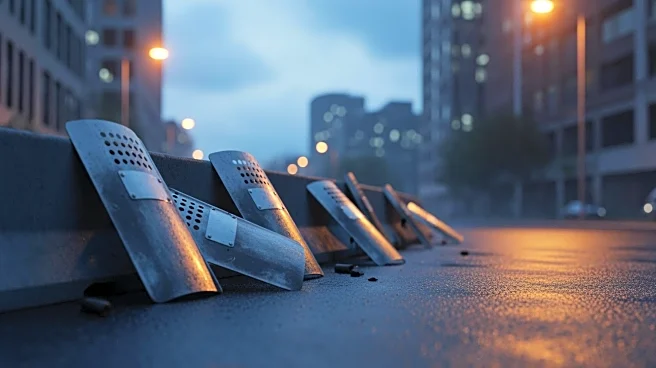
described by organizers as the largest single-day nonviolent protest in modern American history. The Los Angeles Police Department (LAPD) reported that the protest was initially peaceful, with participants marching and listening to speakers. However, after the official rally concluded, a smaller group of agitators clashed with federal officers near the Metropolitan Detention Center. Protesters reportedly attempted to dismantle a chain-link fence and threw objects at officers, prompting the LAPD to declare an unlawful assembly and issue dispersal orders. Tear gas was used to disperse the crowd, and a Tactical Alert was briefly in effect. Among those arrested, 66 adults and eight juveniles were charged with failure to disperse, while one individual was charged with possession of a dirk or dagger.
Why It's Important?
The 'No Kings' protest highlights significant public discontent with the current political climate in the United States. Participants expressed concerns about perceived threats to democracy and constitutional rights, with some fearing a drift towards authoritarianism. The scale of the protest, with events held across all 50 states, underscores a widespread mobilization of citizens advocating for political change. The arrests and use of tear gas in Los Angeles reflect the challenges law enforcement faces in managing large-scale demonstrations, balancing public safety with the right to protest. The event also raises questions about the effectiveness of current protest management strategies and the potential for future civil unrest.
What's Next?
As the political climate remains tense, further protests and demonstrations are likely, especially as the nation approaches upcoming elections. Law enforcement agencies may need to reassess their strategies for handling large gatherings to prevent violence and ensure public safety. Political leaders and policymakers might also face increased pressure to address the concerns raised by protestors, potentially influencing legislative agendas and public discourse. The response to this protest could set a precedent for how similar events are managed in the future, impacting the relationship between law enforcement and the communities they serve.