



What's Happening?
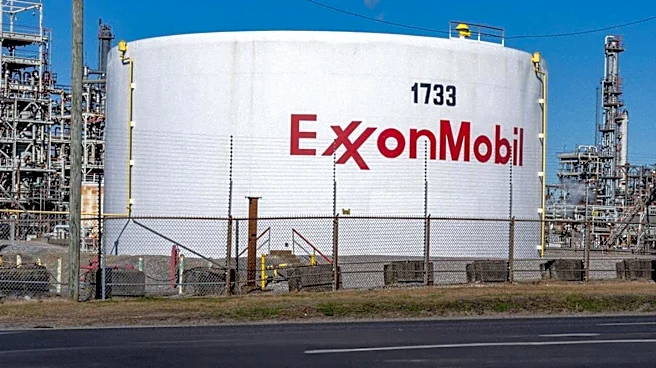
Residents of Cheek, a predominantly Black and working-class community in East Texas, are expressing significant concerns over an ExxonMobil project that plans to inject and permanently store carbon dioxide underground. This project, approved by the Texas Railroad
Commission in September 2026, is poised to be the first of its kind to operate in the state. Despite assurances from ExxonMobil and state regulators regarding safety, community members fear potential contamination of groundwater, air quality issues leading to suffocation, and inadequate emergency response capabilities. Douglas Cormier, president of the Cheek Texas Community Association, highlighted the shock and distrust among residents regarding the project's proximity to homes. The community has sought legal assistance from Earthjustice, a nonprofit, to challenge the permit, citing insufficient measures to protect water and public safety. This situation has also brought to light environmental justice issues, with residents believing their community was targeted due to perceived lower resistance.
Why It's Important?
This situation in Cheek highlights a critical intersection of energy policy, environmental justice, and public health in the United States. As Texas and the broader nation embrace carbon capture and storage (CCS) as a climate change mitigation strategy, the concerns raised by the Cheek community underscore the potential social and environmental costs borne by local populations, particularly those already vulnerable. The project's approval despite community opposition raises questions about the efficacy of regulatory oversight and the prioritization of industrial development over community well-being. The debate also reflects a national tension between the perceived climate benefits of CCS technology and its localized risks, including potential leaks, pipeline ruptures, and groundwater contamination. The outcome of this dispute could set precedents for future CCS projects across the U.S., influencing how companies engage with communities and how regulatory bodies balance economic interests with environmental and social responsibilities. It also brings to the forefront the ongoing challenge of ensuring equitable distribution of environmental burdens and benefits.
What's Next?
The Cheek community has formally asked the Texas Railroad Commission to reconsider its permit decision for the ExxonMobil carbon storage project. This request indicates a continued legal and advocacy battle against the project's implementation. Future developments will likely involve further legal proceedings, community organizing, and potential public hearings where residents can voice their concerns. The Railroad Commission will need to address the community's petition for reconsideration, which could lead to a review of the permit or further engagement with ExxonMobil regarding community safeguards. Additionally, the broader implications for other proposed carbon storage projects in Texas and across the U.S. will be closely watched. The response from state and federal environmental agencies, as well as industry stakeholders, to the concerns raised in Cheek could shape future policies and regulations for carbon capture and storage, particularly concerning community engagement, safety protocols, and environmental justice considerations. The ongoing public comment period for ExxonMobil's second project near Nome, called 'Sunflower,' suggests that similar community dialogues and potential conflicts may arise.
Beyond the Headlines
The conflict in Cheek extends beyond immediate safety concerns, touching upon deeper issues of trust, historical injustices, and the power dynamics between large corporations, government regulators, and marginalized communities. The community's distrust stems not only from the perceived risks of carbon storage but also from a broader history of environmental burdens disproportionately affecting communities of color. This case exemplifies the challenges of implementing large-scale infrastructure projects in the context of environmental justice, where the benefits of such projects (e.g., climate change mitigation) are often diffuse, while the risks are concentrated locally. The debate also highlights the scientific uncertainties and differing expert opinions surrounding CCS technology, with some experts questioning its overall effectiveness in combating climate change. The long-term implications could include increased scrutiny of environmental impact assessments, stronger community consent requirements for industrial projects, and a re-evaluation of how 'public interest' is defined and served in energy development decisions. This situation could also galvanize broader movements advocating for environmental justice and community self-determination in energy policy.