





What's Happening?
The U.S. economy experienced a significant boost in October, adding 165,000 jobs, a figure that surpassed economists' expectations. This growth contributed to a drop in the unemployment rate to 4.1%, continuing a near-historic low streak. The job report
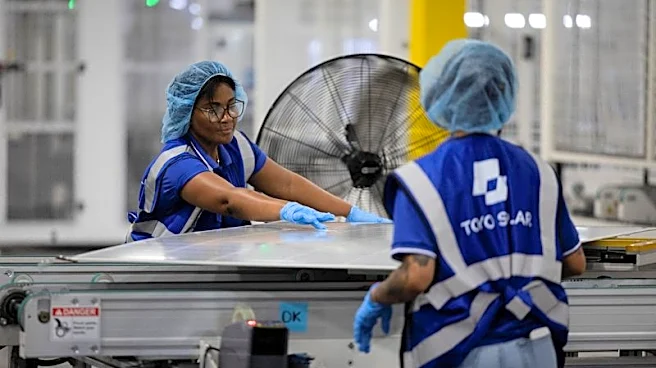
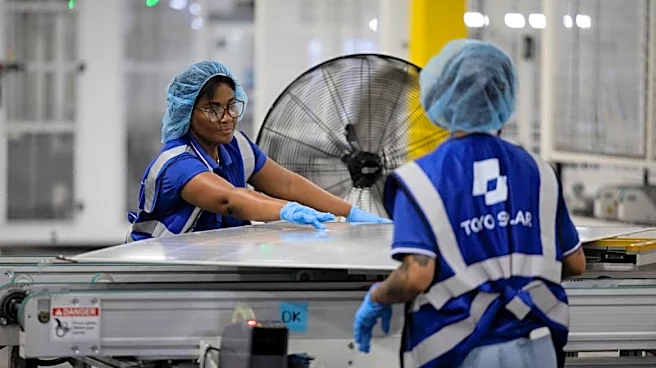
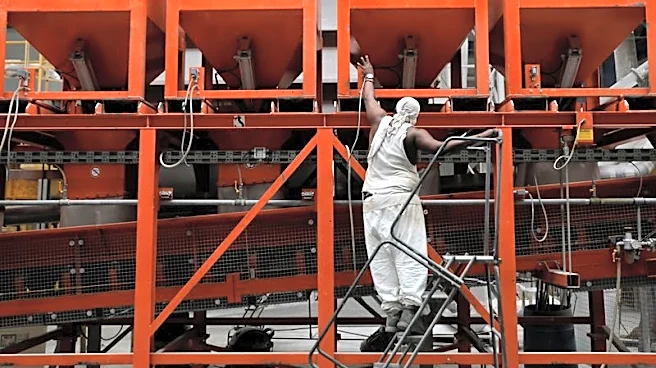
also included upward revisions for previous months, with August's net job gains revised up by 53,000 to 186,000, and September's revised up by 31,000 to 60,000. Key sectors contributing to this growth include healthcare, which added 42,000 jobs, and professional and business services, gaining 70,000 jobs. Manufacturing roles increased by 19,000, with notable gains in computer and electronics manufacturing, machinery manufacturing, and primary metal manufacturing. Nonresidential construction jobs also saw an increase of nearly 3,000, potentially linked to the expansion of AI data centers. Despite the strong job growth, average hourly earnings rose by 3.1% from a year ago, remaining below the current inflation rate of 3.7%.
Why It's Important?
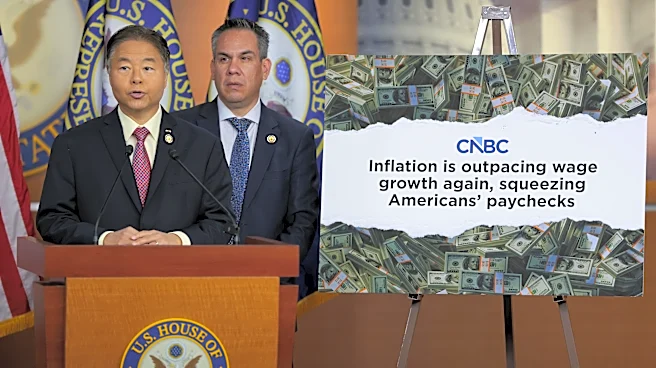
This robust job growth signals continued labor-market stability and consumer resilience in the U.S. economy, as noted by Jennifer Timmerman, senior investment strategy analyst at Wells Fargo. The sustained low unemployment rate indicates a strong demand for labor across various sectors. However, the report also highlights underlying concerns, such as sluggish wage growth that has not kept pace with inflation. Heather Long, chief economist at Navy Federal Credit Union, pointed out that inflation has effectively negated wage gains for seven consecutive months, and since January 2025. This disparity between job creation and real wage growth could impact consumer purchasing power and overall economic well-being. The increase in manufacturing and nonresidential construction jobs, particularly those linked to AI data center buildouts, suggests a potential shift in job market drivers, indicating that technological advancements are beginning to influence specific employment sectors.
What's Next?
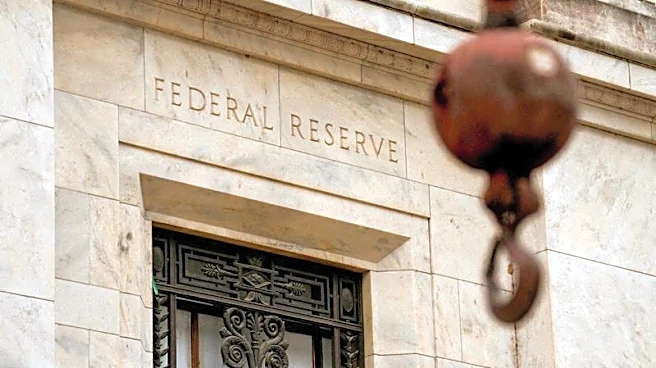
The strong October jobs report is likely to influence the Federal Reserve's upcoming monetary policy decisions. Following the release of the Bureau of Labor Statistics data, the probability of an interest rate hike by the Federal Reserve in December significantly increased to nearly 80%. An interest rate hike could be implemented to combat rising inflation, which currently stands at 3.7% and is on an upward trend. While a rate hike might help cool inflation, it could also impact borrowing costs for businesses and consumers, potentially affecting future job growth and investment. Economists will be closely watching subsequent inflation reports and consumer spending data to gauge the overall health of the economy and the effectiveness of potential monetary policy adjustments. The continued expansion of AI infrastructure could also lead to further job creation in related construction and manufacturing sectors.
Beyond the Headlines
The current economic landscape presents a complex picture where strong job creation coexists with persistent inflationary pressures and stagnant real wages. This situation raises questions about the long-term sustainability of economic growth if wage gains continue to be outpaced by inflation. The increasing influence of AI-related infrastructure development on job creation, particularly in manufacturing and construction, suggests a nascent shift in the types of jobs being generated. While AI is often discussed in terms of job displacement, this report indicates it is also creating new demands in specific sectors. The challenge for policymakers will be to manage inflation without stifling job growth, while also addressing the erosion of purchasing power for American workers. This economic environment could lead to increased discussions about wage policies and the broader impact of technological advancements on the labor market.