



What's Happening?
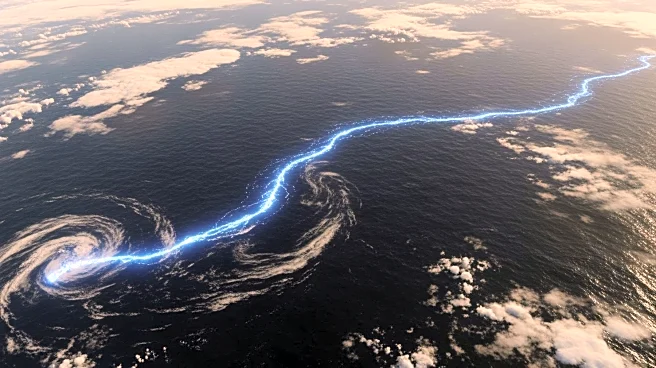
Hurricane Melissa, a Category 5 storm, struck Jamaica with devastating force, leaving behind significant destruction on land and a rare geophysical phenomenon at sea. NASA satellites captured a bright blue trace in the Caribbean Sea, caused by the resuspension
of carbonate sediments from the seafloor of Pedro Bank. This event is considered one of the most striking episodes of sediment resuspension recorded in the satellite era. The hurricane's powerful winds and storm surge mixed the water column, lifting sediments and creating a visible blue plume. This phenomenon provides valuable data for scientists studying ocean dynamics and the global carbon cycle.
Why It's Important?
The blue trace observed by NASA satellites offers a unique opportunity to study oceanographic processes and the impact of hurricanes on marine environments. Such events can reveal information about ocean currents, sediment transport, and the carbon cycle, contributing to a better understanding of how extreme weather events affect the Earth's systems. The data collected can inform future research and policy decisions related to climate change, marine conservation, and disaster preparedness. Additionally, the event highlights the interconnectedness of atmospheric and oceanic systems, emphasizing the need for comprehensive monitoring and analysis.
Beyond the Headlines
The scientific insights gained from this event underscore the importance of satellite technology in monitoring and understanding natural phenomena. The ability to capture and analyze such rare occurrences can lead to advancements in oceanography and climate science. Furthermore, the event serves as a reminder of the broader implications of climate change, as increasing storm intensity and frequency may lead to more such occurrences, affecting marine ecosystems and global carbon storage. This highlights the need for continued investment in scientific research and technology to address the challenges posed by a changing climate.