



What's Happening?
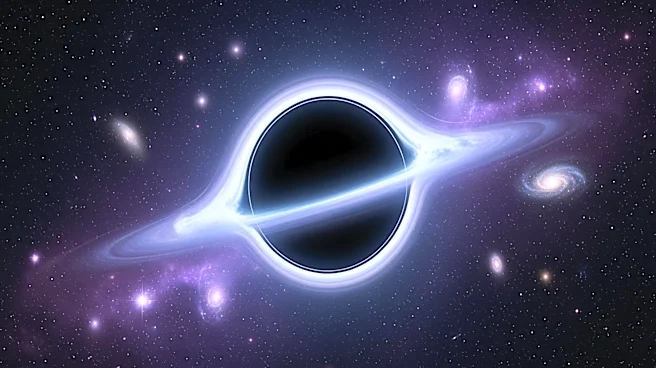
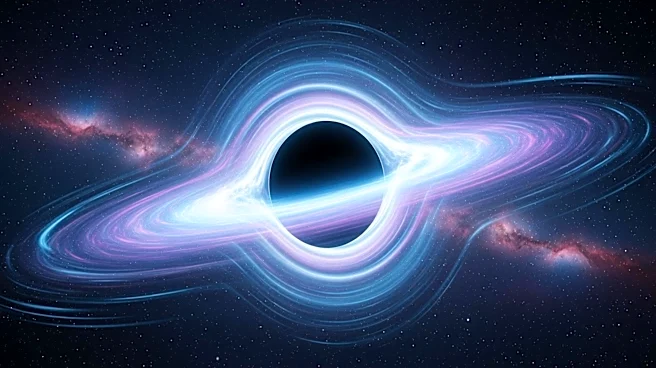
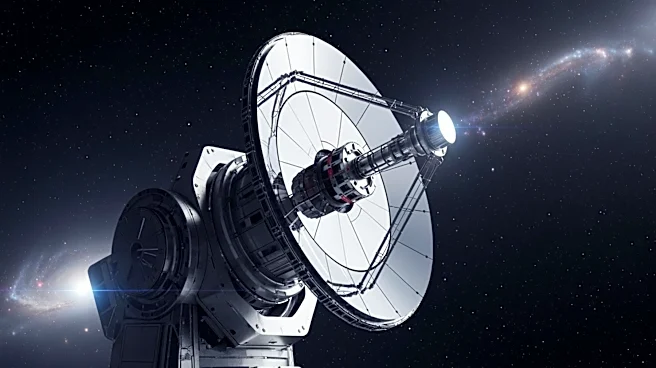
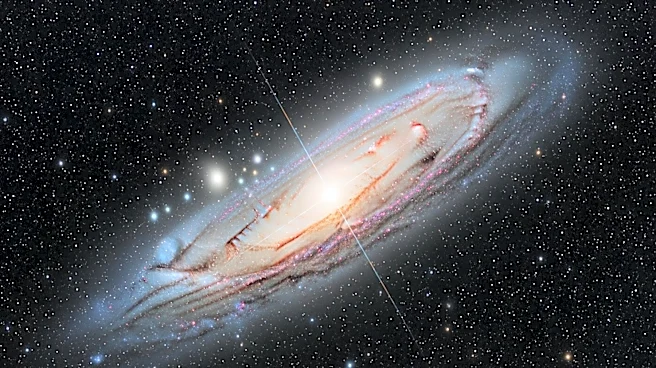
Astronomers have discovered a wind emanating from Sagittarius A* (Sgr A*), the supermassive black hole at the center of the Milky Way, using data from the ALMA telescope and NASA's Chandra X-ray Observatory. This wind, described as a gentle breeze, was
identified by observing a conical cavity filled with hot gas near Sgr A*. The discovery resolves a long-standing mystery about whether Sgr A* expels gas and material into space, a behavior observed in other supermassive black holes. The wind is not as intense as those from more active black holes, reflecting Sgr A*'s relatively quiescent state.
Why It's Important?
This discovery enhances our understanding of the dynamics around supermassive black holes and their impact on their host galaxies. The presence of a wind from Sgr A* suggests that even less active black holes can influence their surroundings, potentially affecting star formation and galactic evolution. The findings also provide a clearer picture of the Milky Way's center, contributing to broader astrophysical models. Understanding these winds is crucial for comprehending the lifecycle of galaxies and the role of black holes in cosmic evolution.
What's Next?
Further observations and studies are expected to explore the implications of this wind on the Milky Way's structure and dynamics. Researchers may investigate how these winds interact with surrounding gas and stars, potentially influencing future star formation. The findings could also prompt a reevaluation of the role of supermassive black holes in less active galaxies, offering new insights into their evolutionary paths.