


What's Happening?
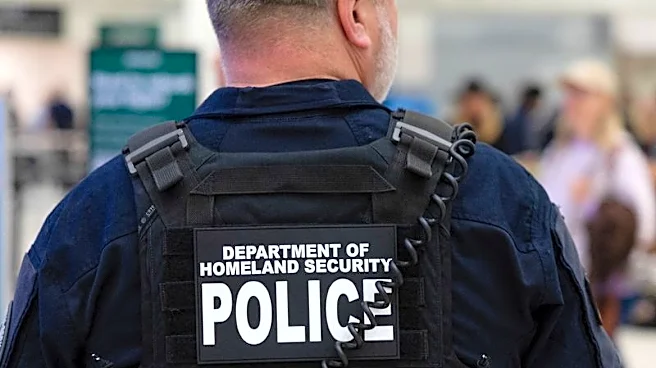
President Trump announced his intention to sign an executive order to pay all Department of Homeland Security (DHS) workers, despite the ongoing partial government shutdown, which has reached its 48th day. This decision follows a previous order that authorized
pay for Transportation Security Administration (TSA) workers. The shutdown persists due to a legislative impasse over funding for Immigration and Customs Enforcement (ICE) and Customs and Border Protection (CBP), which are central to the president's immigration policies. While TSA workers have received back pay, other DHS employees, including those at the Federal Emergency Management Agency, continue to work without pay. The House of Representatives failed to pass a Senate-approved funding bill, which would have temporarily resolved the shutdown, due to pressure from conservative GOP members.
Why It's Important?
The ongoing shutdown has significant implications for federal workers and the operations of the DHS. The inability to pass a funding bill highlights the deep political divisions within Congress, particularly among Republicans. The decision to pay DHS workers, while providing temporary relief, raises questions about the legal authority and financial mechanisms available to the president. The shutdown affects not only the livelihoods of federal employees but also the functioning of critical government services. The prolonged impasse could lead to further economic and operational disruptions, impacting national security and public safety.
What's Next?
The next opportunity for the House to address the funding issue is on April 14, when it is scheduled to return to Washington. Until then, the shutdown is likely to continue, with potential legal challenges to the president's executive order. The situation remains fluid, with possible negotiations and political maneuvering expected as lawmakers seek a resolution. The outcome will depend on the ability of congressional leaders to reach a compromise that satisfies both parties and addresses the funding needs of the DHS.