

What's Happening?
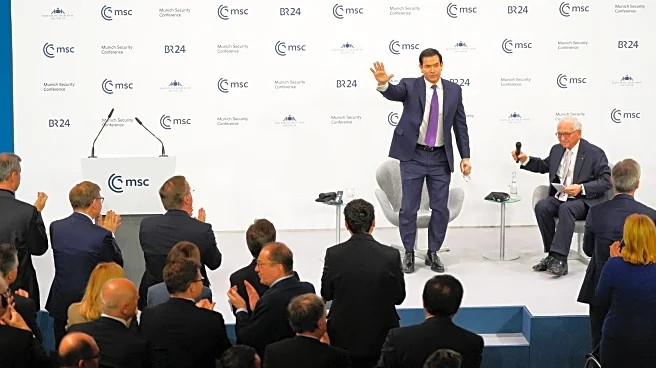
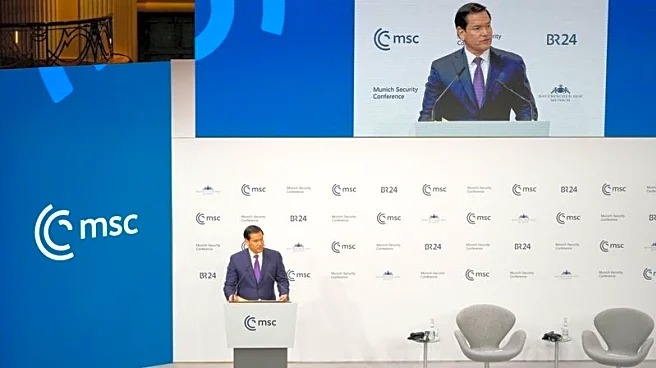
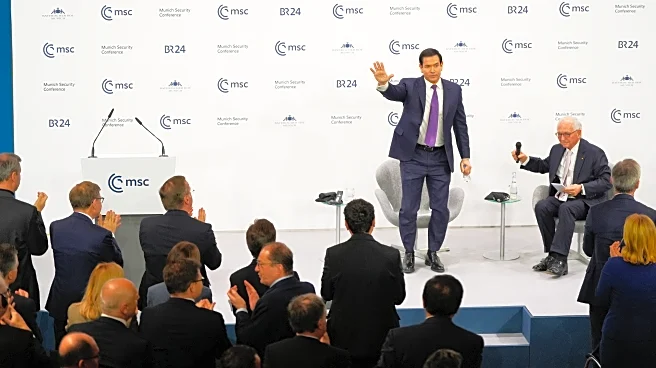
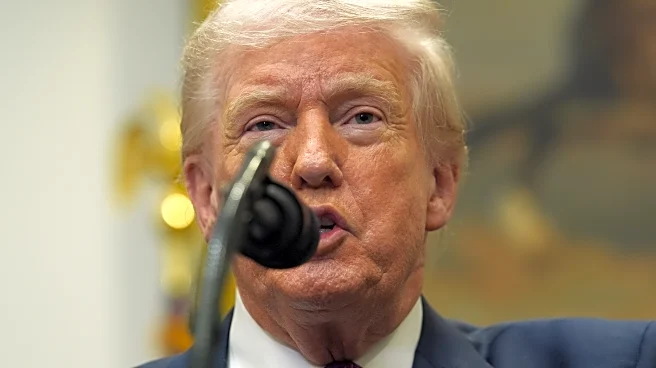
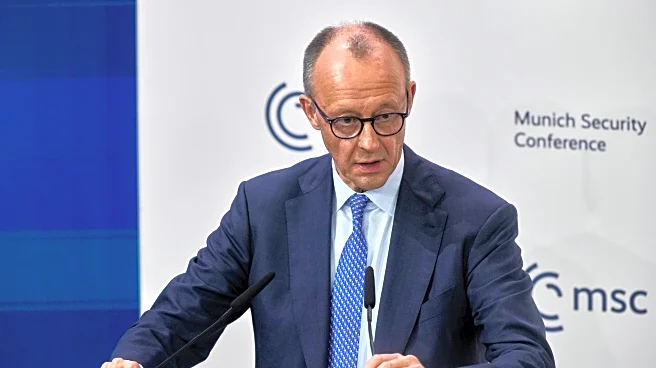
During the Munich Security Conference, Danish Prime Minister Mette Frederiksen expressed concerns over President Donald Trump's ongoing interest in acquiring Greenland. Despite previous rejections, Frederiksen indicated that the issue is not resolved,
suggesting that the U.S. administration's interest remains active. This topic was discussed in a panel where both Danish and Greenlandic leaders participated, highlighting the geopolitical implications of such a move. The acquisition of Greenland has been a recurring topic since President Trump first expressed interest in 2019, which was met with firm opposition from Denmark and Greenland, both of which have strategic interests in maintaining the current status quo.
Why It's Important?
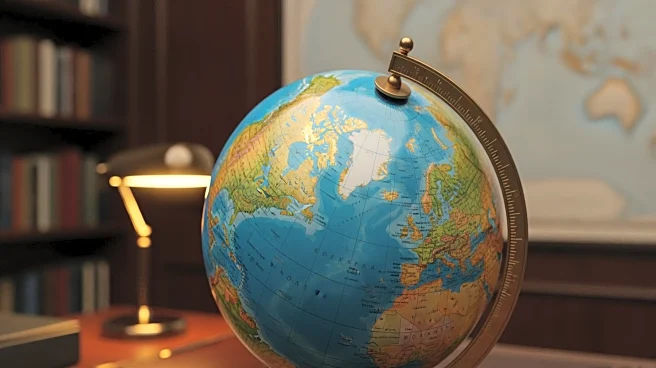
The continued interest in Greenland by the U.S. under President Trump underscores significant geopolitical and strategic considerations. Greenland's location and resources make it a valuable asset in terms of military strategy and natural resources, including rare earth minerals. The potential acquisition could shift power dynamics in the Arctic region, affecting U.S. relations with Denmark and other Arctic nations. Additionally, it raises questions about sovereignty and the implications of such a transaction on international law and regional stability. The persistence of this issue suggests that it remains a point of contention in U.S.-Danish relations, with broader implications for NATO and Arctic policy.
What's Next?
If the U.S. continues to pursue this interest, diplomatic negotiations or tensions could arise between the involved parties. Denmark and Greenland may seek to strengthen their alliances with other nations to counterbalance U.S. influence. The situation could also prompt discussions within international forums about the governance and future of the Arctic region. Monitoring the U.S. administration's actions and statements regarding Greenland will be crucial in anticipating future developments. Additionally, the response from other Arctic nations and international bodies could shape the trajectory of this geopolitical issue.