
What's Happening?
The U.S. Supreme Court recently ruled in the case of Louisiana v Callais, effectively dismantling the 1965 Voting Rights Act by deciding that states cannot consider race in redistricting. This decision
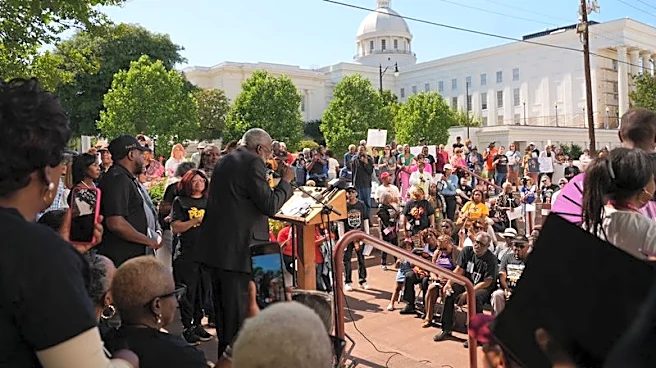
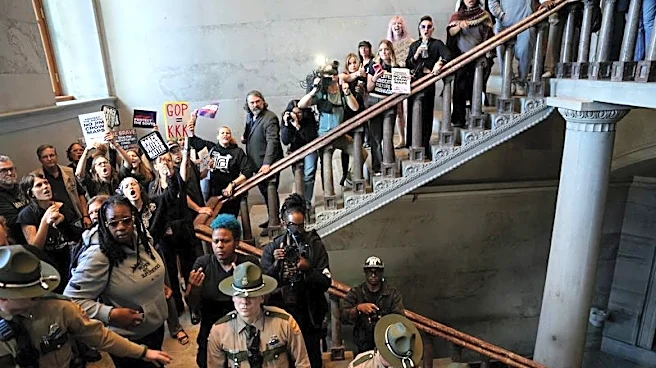
has led to a swift response from Southern states, including Tennessee and Alabama, which have begun to eliminate majority Black districts. The ruling has caused significant disruption ahead of the midterm elections, as it alters the political landscape and affects minority representation. Stacey Abrams, a prominent voting rights activist and former Georgia House Minority Leader, has spoken out against the ruling, describing it as 'evil' and emphasizing the need for increased voter engagement to counteract its effects.
Why It's Important?
The Supreme Court's decision has profound implications for U.S. politics, particularly in terms of minority representation and electoral fairness. By removing the consideration of race in redistricting, the ruling could lead to a dilution of minority voting power, potentially affecting election outcomes and policy decisions. This has sparked a debate about the balance between state rights and federal oversight in ensuring fair representation. The decision also highlights ongoing tensions around voting rights and racial equality in the U.S., with potential long-term impacts on political participation and civil rights advocacy.
What's Next?
In response to the ruling, there is likely to be increased mobilization among civil rights groups and political activists who advocate for voting rights. Efforts may focus on legal challenges, public awareness campaigns, and voter registration drives to mitigate the ruling's impact. Political leaders and organizations may also push for legislative solutions at both state and federal levels to protect minority voting rights. The upcoming midterm elections will serve as a critical test of the ruling's effects and the effectiveness of countermeasures by voting rights advocates.
Beyond the Headlines
The ruling raises broader questions about the role of the judiciary in shaping electoral policies and the potential for increased polarization in U.S. politics. It also underscores the importance of civic engagement and the need for communities to adapt to changing legal landscapes. The decision may prompt a reevaluation of strategies used by political parties to engage with minority voters and could influence future legislative efforts to address voting rights and electoral fairness.