



What's Happening?
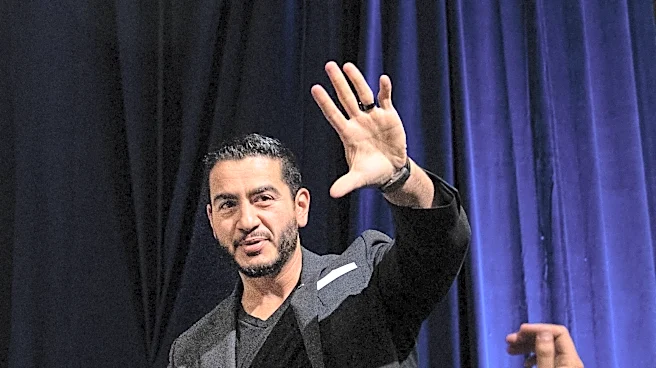
Michigan Attorney General Dana Nessel addressed fellow Jewish Democrats, urging them to prioritize the 'needs of the world' over 'our own self-interest.' In a video obtained by the Detroit News, Nessel suggested that the Jewish community might need to 'sacrifice'
even 'the very future of our own people' for the sake of greater humanity. She drew a parallel to the biblical Queen Esther, who risked her life to save the Jewish people. Nessel's remarks came after she did not attend her party's nominating convention, citing safety concerns amid heated opposition to Israel among Democrats. She expressed feeling unsafe and unwelcome, fearing harassment and being booed. Nessel also criticized the Republican Party, stating they would have people believe the biggest issue facing the nation is 'transgender girls playing JV volleyball,' and questioned the relevance of defending the 'historic homeland of our ancestors' if the planet becomes uninhabitable.
Why It's Important?
Attorney General Nessel's statements are significant as they highlight a growing tension within the Democratic Party regarding the balance between specific community interests and broader global concerns, particularly within the Jewish community. Her call for prioritizing 'the needs of the world' over 'self-interest' could be interpreted as a challenge to traditional political advocacy focused on ethnic or religious group concerns. This perspective could influence how Jewish Democrats engage with the party and shape their political priorities, potentially leading to internal debates about identity, loyalty, and political strategy. Furthermore, her criticism of the Republican Party's focus on social issues like transgender rights underscores the deep ideological divides in U.S. politics and how these divisions impact the framing of national priorities. The safety concerns she cited for not attending the convention also reflect the intensity of political discourse and the challenges faced by public figures in navigating sensitive topics.
What's Next?
Nessel's remarks are likely to spark further discussion and debate within the Jewish Democratic community and the broader Democratic Party. Her call for a re-evaluation of priorities could lead to internal shifts in political engagement and advocacy. Other Jewish leaders and Democratic politicians may respond to her statements, either in support or opposition, further shaping the discourse. The ongoing tensions within the Democratic Party regarding issues like Israel and global humanitarian concerns will likely continue to be a factor in future political conventions and policy discussions. Nessel's stance could also influence how the Democratic Party addresses issues of identity politics versus universal concerns, potentially impacting its platform and outreach strategies in upcoming elections.
Beyond the Headlines
Beyond the immediate political implications, Nessel's invocation of Queen Esther and the concept of sacrificing 'the very future of our own people' for humanity delves into profound ethical and philosophical territory. This framing suggests a re-imagining of collective responsibility and the role of specific communities in addressing global challenges. It raises questions about the nature of self-preservation versus altruism in political action and whether such a sacrifice is truly feasible or desirable. The statement could also be seen as an attempt to reframe the narrative around Jewish political engagement, moving it from a focus on national or ethnic interests to a more universalist perspective. This could have long-term cultural and ideological impacts on how Jewish identity is expressed within the political sphere and how inter-community alliances are formed or strained.