





What's Happening?
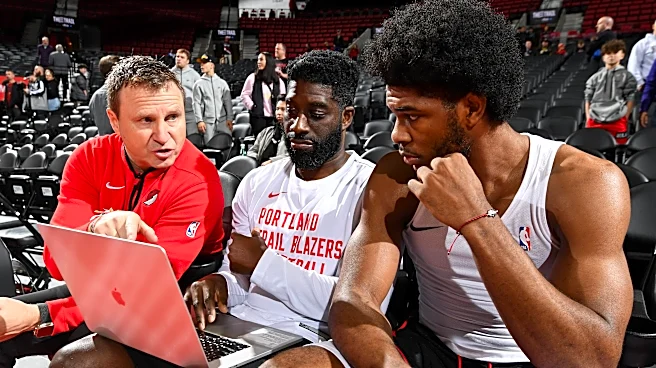
TEGNA, the parent company of KGW-TV, has reportedly launched an internal review into the station's reporting that led to the firing of Portland Trail Blazers' newly appointed TV play-by-play announcer, Braiden Bell. Bell was dismissed by the NBA franchise
less than a day after his announcement, following the discovery of offensive social media posts he made as a teenager. KGW reporter Devon Haskins initially uncovered these tweets from 2012 and 2013, which contained racist and misogynistic content. The KGW report noted that no offensive tweets were found from Bell after he reached adulthood. The internal review by TEGNA will focus on whether KGW-TV and its journalists, including news director John Tierney and sports reporter Devon Haskins, adhered to the company's editorial processes in researching and reporting the story. The situation has sparked debate regarding accountability for past social media posts and the role of journalism in such discoveries.
Why It's Important?
This incident highlights the complex and evolving challenges faced by individuals and media organizations in the digital age, particularly concerning historical online content. For individuals, it underscores the lasting impact of past social media activity, even from adolescence, on professional careers. For media outlets, it raises critical questions about journalistic ethics, the public interest in reporting on past indiscretions, and the potential for such reports to lead to immediate and severe consequences for the subjects. The backlash against KGW's journalists, including the removal of contact information and deletion of social media profiles, demonstrates the intense public scrutiny and pressure that can arise. This event contributes to a broader societal conversation about forgiveness, rehabilitation, and the extent to which individuals should be held accountable for actions taken years prior, especially when those actions occurred before adulthood. It also forces a re-evaluation of hiring practices in public-facing roles, where an extensive digital footprint is now a standard part of background checks.
What's Next?
The internal review by TEGNA will likely determine if KGW's reporting followed established journalistic standards and company policies. The outcome could influence future editorial guidelines for reporting on individuals' past social media content, particularly for those in public roles. The broader discussion about the permanence of online records and their impact on careers is expected to continue, potentially leading to more defined policies within organizations regarding social media conduct and background checks. This incident may also prompt further debate within the journalism community about the ethical responsibilities of reporting on past online behavior, especially when it leads to significant professional repercussions. The Portland Trail Blazers will need to find a new play-by-play announcer, and the process may be influenced by the scrutiny surrounding Bell's dismissal.
Beyond the Headlines
The situation delves into deeper societal questions about cancel culture, the nature of public shaming, and the balance between holding individuals accountable for harmful past statements and allowing for personal growth and redemption. The immediate firing of Braiden Bell, despite the posts being from his teenage years, reflects a growing intolerance for offensive content, regardless of its age. This incident also touches upon the power dynamics between media organizations, public figures, and the online community, where a single report can trigger a rapid and irreversible chain of events. The debate over whether KGW was 'wrong' to report on Bell's past tweets highlights the ongoing tension between transparency and privacy in an era where digital footprints are indelible. It also raises questions about the role of employers in policing the past online behavior of their employees, particularly when that behavior predates their employment or even their maturity.