



What's Happening?
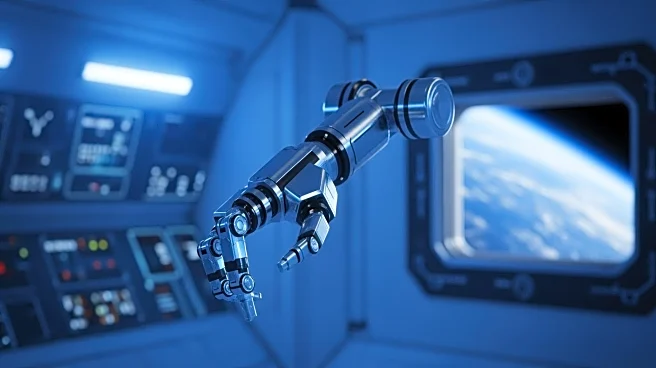
For the first time, artificial intelligence has been used to pilot a free-flying robot aboard the International Space Station (ISS). Researchers from Stanford University, in collaboration with NASA, successfully demonstrated the use of AI to navigate
the Astrobee robot through the ISS's complex environment. The AI system, developed by Stanford researchers, uses a machine-learning model to plan safe routes through the station's crowded modules, significantly reducing computation time compared to traditional methods. This advancement addresses the challenge of moving autonomously in microgravity with limited computing power and minimal human input.
Why It's Important?
The successful use of AI to control a robot on the ISS marks a significant step forward in space robotics. It demonstrates the potential for autonomous systems to handle tasks in space, reducing the need for human intervention. This capability is crucial for future missions to the Moon, Mars, and beyond, where real-time human control may not be feasible. The AI-guided planning could allow robots to perform inspections, logistics, and scientific tasks, freeing astronauts to focus on more critical work. The development also highlights the growing role of AI in enhancing the efficiency and safety of space operations.
What's Next?
The AI system's success on the ISS sets the stage for broader applications of autonomous robotics in space exploration. Future missions could see increased reliance on AI for navigation and task execution, particularly in environments where human presence is limited or impossible. The technology could be adapted for use in other space missions, including those involving lunar and Martian exploration. Continued development and testing of AI systems will be essential to ensure their reliability and safety in the challenging conditions of space.