
What's Happening?
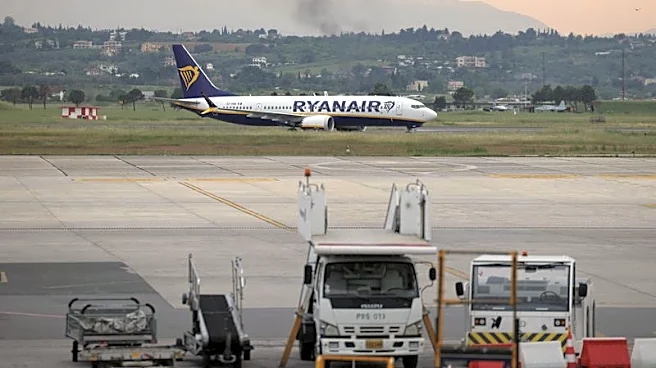
Ryanair has announced the closure of its base in Thessaloniki, Greece, citing uncompetitive airport charges imposed by Fraport Greece, the operator of 14 regional airports. The budget airline plans to withdraw
three aircraft and cut 12 routes, including 10 from Thessaloniki and two from Athens. Ryanair claims that the Greek government's reduction in the airport development fee has not been adequately passed on to airlines, leading to increased operational costs. Fraport Greece, however, attributes Ryanair's decision to the airline's commercial strategy rather than airport charges.
Why It's Important?
The closure of Ryanair's Thessaloniki base highlights the ongoing tensions between airlines and airport operators over fees and charges. Such disputes can significantly impact regional connectivity and economic activity, affecting tourism and local businesses. For Ryanair, reallocating resources to other countries like Italy, Sweden, and Albania may offer better financial returns. However, the move could reduce travel options for passengers in Greece and potentially lead to higher prices due to decreased competition.
What's Next?
As Ryanair shifts its operations, other airlines may seek to fill the gap left in the Greek market, potentially leading to new partnerships or route expansions. The Greek government and Fraport Greece may need to reassess their fee structures to attract and retain airline services. This situation could also prompt broader discussions within the aviation industry about balancing airport development costs with competitive pricing to support airline operations.