




What's Happening?
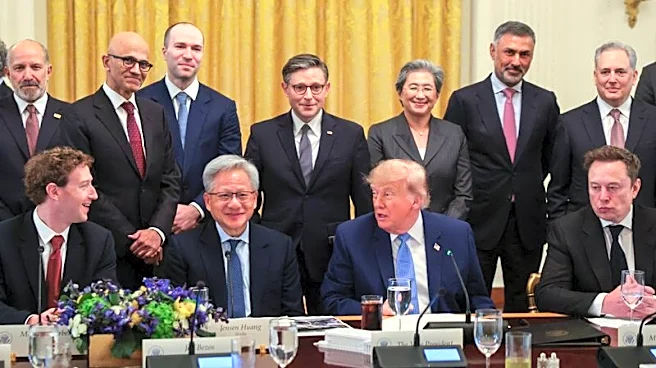
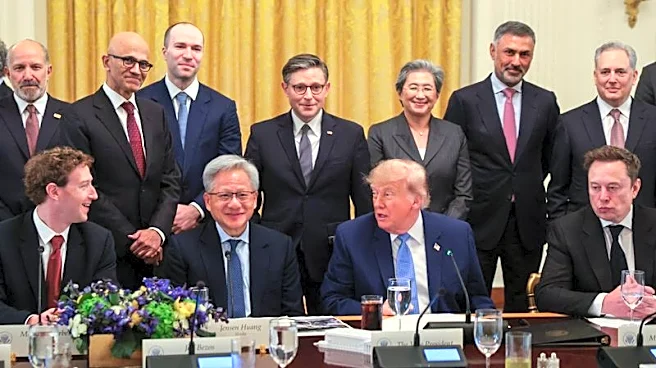
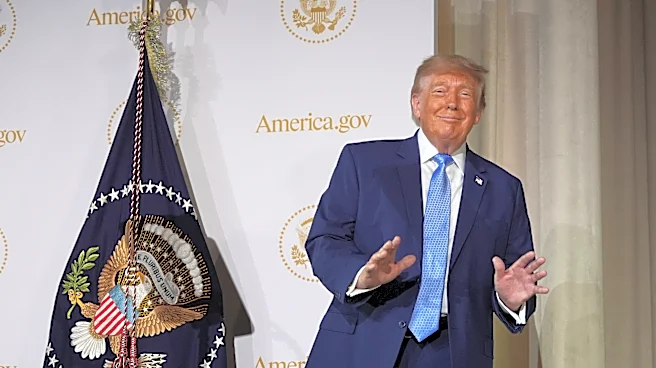
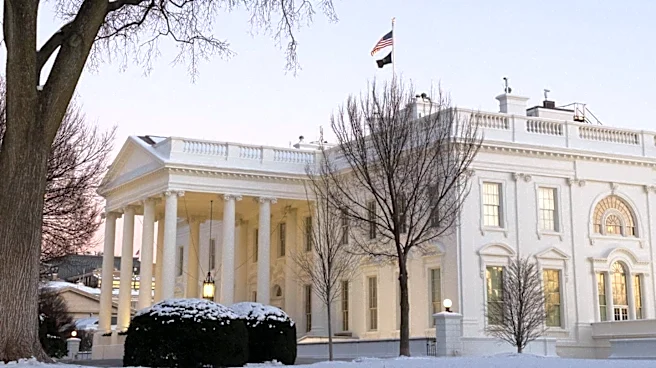
President Trump recently convened a meeting with several prominent artificial intelligence (AI) leaders at the White House. The gathering included CEOs from major tech companies such as Meta, Nvidia, Palantir, Google, and Anthropic. During the discussions,
President Trump emphasized his administration's stance against government regulation of AI, advocating instead for 'tremendous self-regulation' within the industry. He indicated that there was a consensus among his team and the attending CEOs on this approach. This meeting follows an earlier event focused on AI and precedes a planned executive order later the same afternoon, underscoring President Trump's commitment to fostering unfettered growth in the AI sector. He was notably flanked by Elon Musk of Tesla and SpaceX, and Jensen Huang of Nvidia, among other industry figures.
Why It's Important?
This meeting is significant as it outlines the Trump administration's preferred approach to the rapidly evolving field of artificial intelligence, prioritizing industry self-regulation over government oversight. This stance could have profound implications for the development and deployment of AI technologies in the U.S., potentially accelerating innovation by reducing regulatory burdens. For tech companies, this signals a favorable environment for growth and investment, as they would largely be responsible for setting their own ethical and operational guidelines. However, it also places a substantial responsibility on these companies to address growing concerns about AI dangers, such as bias, privacy, and job displacement, without direct governmental mandates. The emphasis on self-regulation also reflects a strategic consideration regarding international competition, particularly with China, aiming to ensure the U.S. maintains a leading edge in AI development.
What's Next?
Following the meeting, President Trump is expected to issue an executive order later the same day, which will further detail his administration's strategy and focus on AI. This order will likely reinforce the principles of self-regulation and innovation, providing a clearer framework for how the U.S. government intends to interact with the AI industry. The tech leaders present at the summit will likely continue to engage in discussions and initiatives aimed at developing industry-led standards and best practices for AI. The debate surrounding the appropriate level of AI regulation is expected to intensify, with various stakeholders, including civil society groups and other political figures, likely to weigh in on the balance between fostering innovation and mitigating potential risks. The long-term impact of this approach on the U.S.'s global standing in AI and its domestic societal implications will be closely watched.
Beyond the Headlines
The administration's push for 'tremendous self-regulation' in AI raises deeper questions about accountability and public trust in an era of rapid technological advancement. While proponents argue that self-regulation can foster agility and innovation, critics may point to potential risks if companies prioritize profit over public safety or ethical considerations. The absence of robust governmental oversight could lead to a fragmented regulatory landscape, where different companies adopt varying standards, potentially creating inconsistencies in how AI is developed and deployed. This approach also places a significant burden on the tech industry to proactively address complex ethical dilemmas, such as algorithmic bias and the societal impact of automation, without external enforcement. The long-term success of this strategy will depend on the industry's ability to demonstrate effective self-governance and maintain public confidence, potentially setting a precedent for how emerging technologies are managed in the future.