







What's Happening?
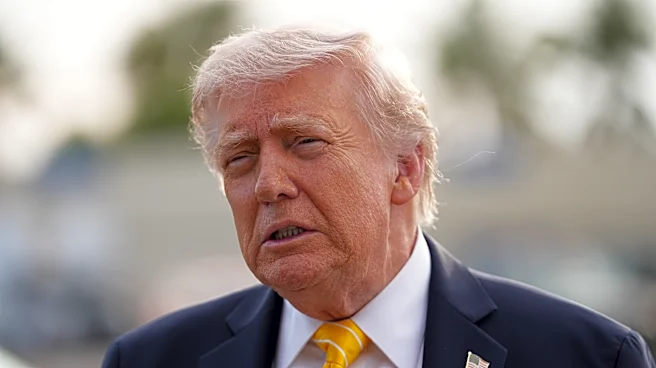
President Donald Trump announced that he is reviewing a new proposal from Iran aimed at ending the ongoing conflict. This proposal, reportedly a 14-point plan, was sent via Pakistan in response to a previous nine-point proposal from the U.S. The discussions
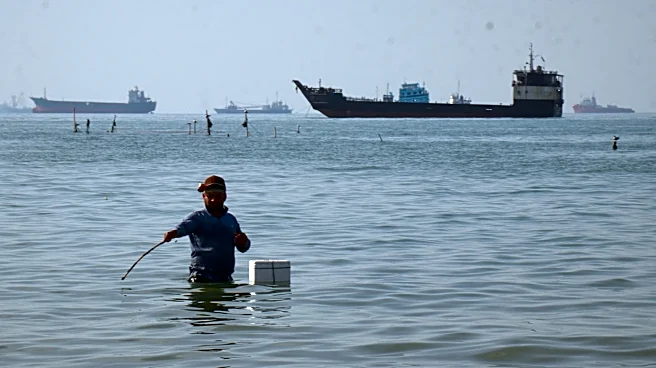
come amid a three-week ceasefire that appears to be holding. President Trump has also proposed reopening the Strait of Hormuz, a critical passage for global oil and natural gas trade. Meanwhile, the health of Iranian rights lawyer Narges Mohammadi, who is imprisoned, has deteriorated, prompting calls for her transfer to Tehran for medical treatment.
Why It's Important?
The review of Iran's proposal by President Trump is significant as it could lead to a de-escalation of tensions in the region, potentially stabilizing global oil markets. The Strait of Hormuz is a vital corridor for energy exports, and its reopening could alleviate some economic pressures. Additionally, the situation of Narges Mohammadi highlights ongoing human rights concerns in Iran, drawing international attention and pressure on Iranian authorities. The U.S. has also warned shipping companies about potential sanctions, indicating a complex geopolitical landscape that could impact international trade and diplomatic relations.
What's Next?
The next steps involve President Trump’s decision on the Iranian proposal, which could influence U.S. foreign policy and military strategy in the Middle East. The international community, including human rights organizations, will likely continue to monitor the situation of Narges Mohammadi, advocating for her medical treatment. The U.S. may also continue to enforce sanctions and maintain a naval blockade, affecting Iran's economy and regional dynamics. Stakeholders, including global energy markets and diplomatic entities, will be closely watching these developments.