

What's Happening?
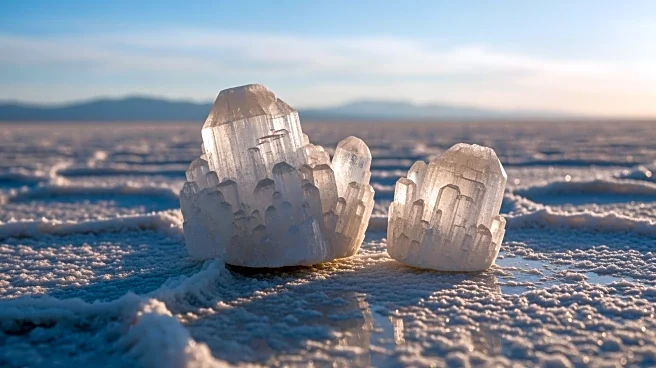
NASA's Landsat 8 has captured images of the Salt Plains National Wildlife Refuge in Oklahoma, highlighting the unique selenite crystals found in the area. The refuge, located about 90 miles northwest of Oklahoma City, is the only place in the world where
people can dig for these distinctively patterned crystallized gypsum formations. The images, taken on October 10, 2025, show the salt basin partially filled by Great Salt Plains Lake, a shallow reservoir formed by the damming of the Salt Fork Arkansas River. The false-color images combine shortwave infrared with visible light, revealing variations in moisture and salinity levels. The selenite crystals, known for their hourglass shape, form when saline water combines with gypsum in the top two feet of the wet subsurface. This process is influenced by temperature and moisture levels, and the crystals can dissolve if the environment becomes too wet. The area is also a habitat for over 300 species of birds and other wildlife.
Why It's Important?
The imaging of the Salt Plains National Wildlife Refuge by NASA's Landsat 8 provides valuable data for understanding the unique geological and ecological characteristics of the area. The presence of selenite crystals, which are not found anywhere else in the world, highlights the geological significance of the region. Additionally, the refuge serves as a critical habitat for a diverse range of wildlife, including endangered species like the whooping crane. The data collected can aid in the conservation efforts of these species and the management of the refuge's natural resources. Furthermore, the ability to monitor changes in moisture and salinity levels through satellite imagery can help scientists study the impacts of climate change on such unique ecosystems.
What's Next?
Future monitoring of the Salt Plains National Wildlife Refuge using satellite imagery will continue to provide insights into the environmental changes affecting the area. This ongoing observation can help in assessing the impacts of climate change and human activities on the refuge's ecosystem. Additionally, the data can be used to inform conservation strategies for the protection of the unique selenite crystals and the diverse wildlife that depend on this habitat. Researchers may also explore the potential for similar geological formations in other parts of the world, using the Salt Plains as a model for understanding the conditions necessary for selenite crystal formation.