



What's Happening?
Azerbaijan officially celebrates Victory Day on November 8, commemorating the capture of the city of Shusha during the 44-day war over Nagorno-Karabakh in 2020. While November 10, 2020, marked the effective date of the trilateral agreement to cease hostilities,
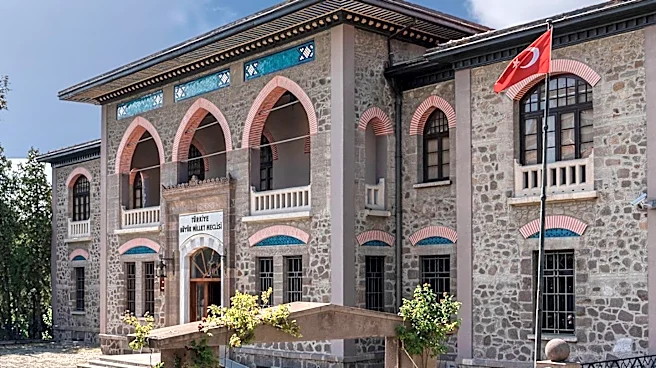
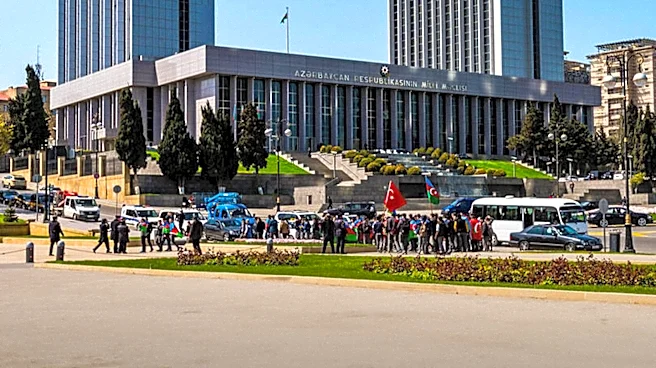
signed by Azerbaijani President Ilham Aliyev, Armenian Prime Minister Nikol Pashinyan, and Russian President Vladimir Putin, the official holiday was moved. Initially, November 10 was chosen for Victory Day, but it was later changed to November 8 to avoid coinciding with Turkey's commemoration of Mustafa Kemal Atatürk, given the close political and cultural ties between Azerbaijan and Turkey. The November 10 agreement provided for a ceasefire, the deployment of Russian peacekeepers, and the transfer of several districts to Azerbaijan, as well as the reopening of transportation routes, including links between western Azerbaijan and the Nakhchivan Autonomous Republic through Armenian territory.
Why It's Important?
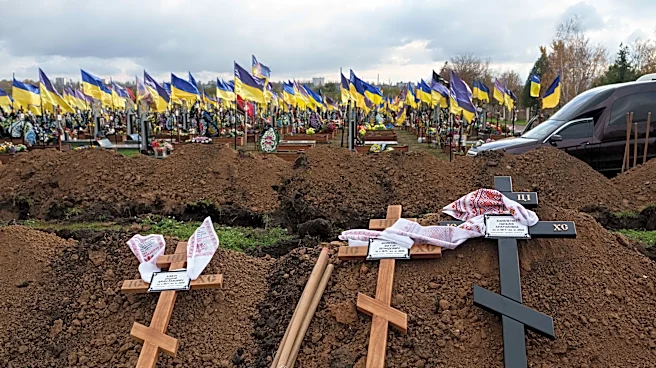
The shift in the official Victory Day from November 10 to November 8 highlights the symbolic significance of Shusha's capture for Azerbaijan and its strong cultural and political ties with Turkey. The 2020 ceasefire agreement was a pivotal moment, ending decades of conflict and reshaping the geopolitical landscape of the South Caucasus. The agreement's provisions for reopening transportation routes are particularly important, as they aim to enhance regional connectivity and economic integration, potentially fostering greater stability. However, the implementation of these agreements has been accompanied by disputes over interpretation and enforcement, indicating ongoing challenges in achieving a lasting peace. The historical context of the Nagorno-Karabakh conflict, marked by displacement and unresolved issues, underscores the deep-seated complexities that continue to influence regional dynamics and the prospects for future cooperation.
What's Next?
While November 10, 2026, will be an additional non-working day in Azerbaijan due to Victory Day on November 8 falling on a Sunday, the official celebration remains on November 8. The provisions of the 2020 agreement regarding transportation links and economic ties in the South Caucasus continue to be a focus of negotiations. The ongoing disputes between the parties regarding the interpretation and enforcement of these agreements suggest that further diplomatic efforts will be required to fully realize the potential for regional connectivity. The return of refugees and internally displaced persons, as outlined in the trilateral statement, also remains a critical humanitarian and logistical challenge that needs to be addressed. The long-term stability of the region will depend on the successful resolution of these complex issues and the establishment of durable peace mechanisms.
Beyond the Headlines
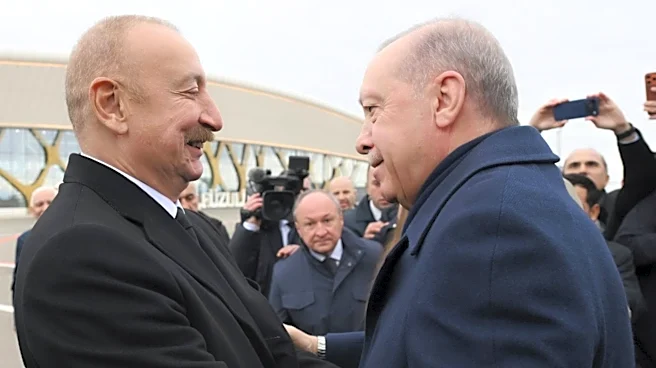
The decision to move Victory Day from November 10 to November 8, primarily to avoid conflicting with Turkey's Atatürk commemoration, reveals the profound cultural and political alignment between Azerbaijan and Turkey. This move underscores the strategic importance of their alliance in the South Caucasus. The 2020 ceasefire, while ending active hostilities, did not fully resolve the underlying issues of the Nagorno-Karabakh conflict, leaving room for continued disputes over territorial integrity and constitutional changes. The agreement's emphasis on reopening transportation routes, such as the link to Nakhchivan through Armenia, has broader implications for regional trade and energy corridors, potentially altering geopolitical dependencies. The ongoing process of demining and infrastructure restoration in the regained territories also highlights the immense post-conflict challenges and the long road ahead for true reconciliation and sustainable development in the region.