






What's Happening?
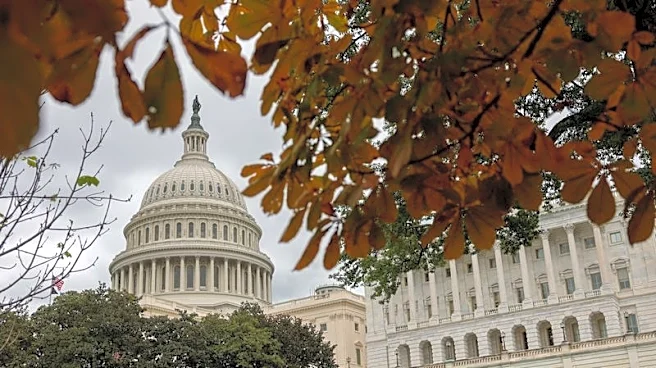
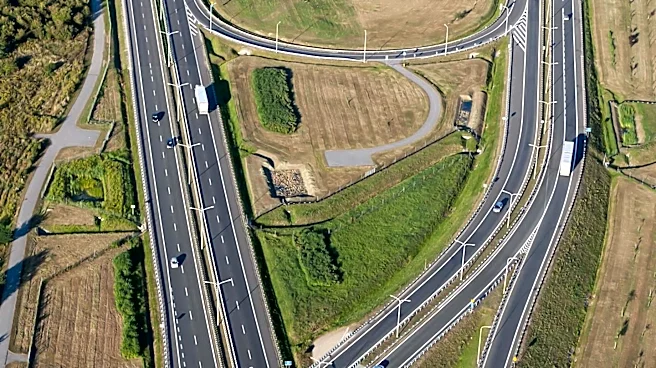
The 2021 Infrastructure Investment and Jobs Act (IIJA), which provided $326 billion for U.S. road and bridge repair, modernization, and resilience, expired in September. Congress is now deliberating the next phase of federal roadway investments, including
funding levels and program structures. While core highway funding is likely to be preserved, the future of many discretionary grants, particularly those supporting resilience and modernization, remains uncertain. For instance, the Promoting Resilient Operations for Transformative, Efficient, and Cost-Saving Transportation (PROTECT) Program, which has supported $2.3 billion in transportation resilience projects, faces potential scaling back or elimination under current federal proposals. This uncertainty complicates state budgeting for roadways, as they lack a clear picture of future federal support.
Why It's Important?
The potential reduction or elimination of IIJA funding streams, especially for climate-related modernization and resilience, poses significant risks to the nation's infrastructure and economic stability. The IIJA had addressed a substantial backlog of deferred maintenance, particularly for bridges, and introduced new programs to strengthen transportation systems against extreme weather. A return to pre-IIJA funding levels could exacerbate the existing $1.2 trillion gap in surface transportation needs, potentially increasing it to $1.8 trillion by 2033, according to a 2024 report by the American Society of Civil Engineers. This would place a greater financial burden on state and local governments, potentially leading to delayed critical upgrades, compromised safety, and reduced economic efficiency due to deteriorating infrastructure. The scaling back of resilience programs like PROTECT could leave critical roadways vulnerable to flooding, storm surges, and other extreme weather effects, hindering emergency response and economic recovery.
What's Next?
Congress is currently considering the next federal surface transportation law, which will determine the future of roadway investments. The outcome will dictate how much federal support states receive for critical infrastructure projects, particularly those focused on resilience and modernization. If the next law is delayed, states could face an immediate 13% reduction in road and bridge funding due to the expiration of IIJA's advance appropriations, even under a short-term extension. This uncertainty will continue to challenge state transportation budgeting and planning. Stakeholders, including state departments of transportation, construction companies, and advocacy groups, will be closely monitoring legislative developments to understand the implications for future projects and funding availability.
Beyond the Headlines
The debate over federal infrastructure funding extends beyond immediate budgetary concerns, touching upon long-term national priorities and the evolving role of the federal government in climate adaptation. The potential scaling back of resilience programs highlights a tension between immediate infrastructure needs and proactive measures to address the impacts of climate change. This situation could force states to innovate in funding and project execution, potentially leading to new partnerships with the private sector or increased reliance on state-level revenue generation. The broader implication is a potential shift in how the U.S. approaches infrastructure development, moving towards a more localized and potentially fragmented strategy if federal support for critical, forward-looking projects diminishes.