










What's Happening?
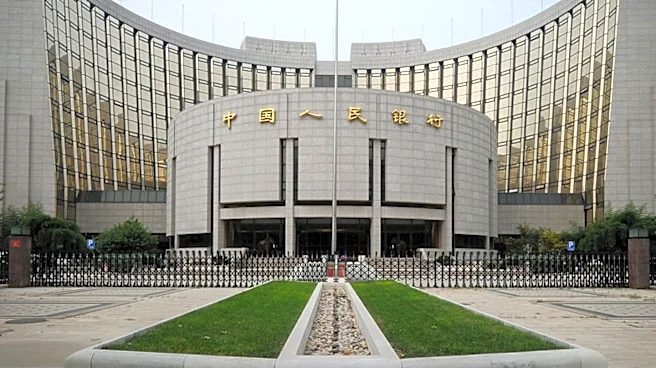
China's central bank has reported a significant increase in its gold reserves, marking the largest monthly addition in over two and a half years. In June, the bank added 480,000 ounces to its reserves, extending its buying streak to 20 consecutive months.
This move is part of a broader strategy to stabilize gold prices amid global market volatility. In contrast, India's gold market is experiencing a downturn, with gold trading at a wide discount due to price volatility. Indian dealers are offering gold at discounts of up to $19 an ounce over official domestic prices, as retail buying has slowed significantly. Most transactions in India are now exchanges of old jewelry for new, reducing the need for jewelers to replenish inventories by purchasing gold from banks.
Why It's Important?
The actions of China's central bank are significant as they reflect a strategic approach to managing economic stability through gold reserves. By increasing its gold holdings, China is potentially safeguarding against currency fluctuations and economic uncertainties. This move could influence global gold prices and impact international trade dynamics. Meanwhile, the situation in India highlights the challenges faced by emerging markets in maintaining demand amid price volatility. The contrasting scenarios in China and India underscore the varying economic strategies and market conditions in Asia, which could have broader implications for global economic trends and investor confidence.
What's Next?
China's continued accumulation of gold reserves suggests a long-term strategy to enhance economic resilience. This could lead to further stabilization of gold prices, benefiting countries and investors with significant gold holdings. In India, the current market conditions may prompt policy adjustments to stimulate demand and stabilize prices. The differing approaches of these two major economies could influence regional economic policies and trade relations. Observers will likely monitor China's future gold purchases and India's market responses to assess their impact on the global economy.