










What's Happening?
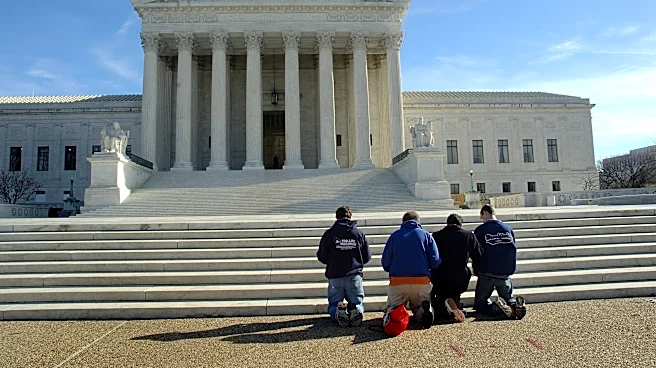
Four years after the Supreme Court's decision in Dobbs v. Jackson Women's Health Organization, which overturned Roe v. Wade, the landscape of abortion in the United States has become increasingly complex. Despite expectations that the number of abortions
would decrease following the ruling, data indicates that the number of procedures has actually risen. This increase is attributed to the expansion of telehealth services and medication abortions, which have made access easier in states with supportive policies. Meanwhile, states with strict bans have seen a rise in abortions conducted via telehealth. The decision has led to a patchwork of state laws, with some states enacting near-total bans and others expanding protections.
Why It's Important?
The rise in abortion numbers despite restrictive laws highlights the adaptability of access methods and the limitations of state-level bans. The increased use of telehealth and medication abortions reflects a shift in how reproductive healthcare is accessed, emphasizing the role of technology in overcoming legal barriers. This development underscores the ongoing national debate over reproductive rights and the challenges faced by states attempting to enforce strict abortion laws. The situation also raises questions about the effectiveness of state-level restrictions and the potential need for federal legislation to address the disparities in access.
What's Next?
As legal and political battles over abortion continue, the focus may shift towards federal legislation to address the inconsistencies in access across states. The ongoing use of telehealth and medication abortions suggests that these methods will remain central to reproductive healthcare, potentially prompting further legal challenges. States with restrictive laws may seek to tighten regulations on telehealth services, while those with protective laws may continue to expand access. The evolving landscape will likely influence future political campaigns and legislative agendas, as stakeholders on both sides of the issue push for changes that align with their views.