








What's Happening?
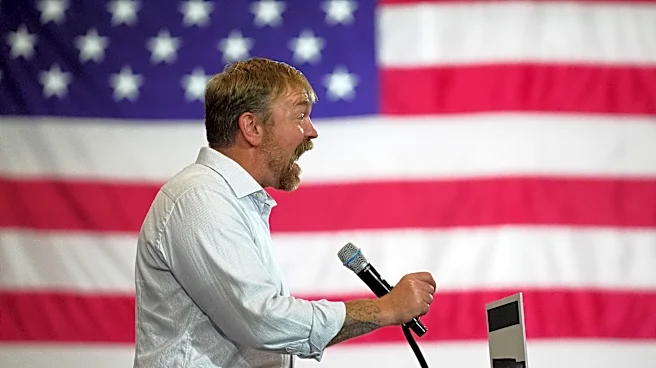
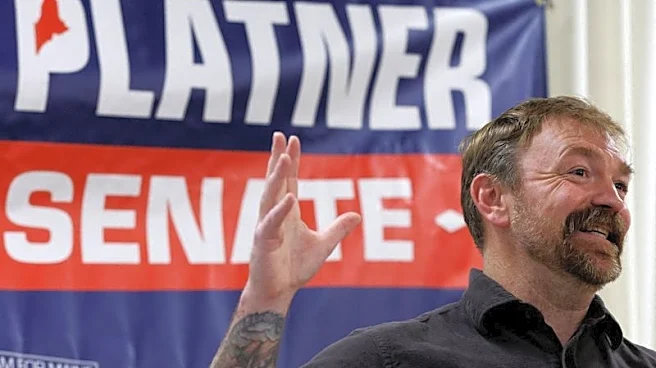
Maine's Democratic Senate nominee, Graham Platner, is facing calls to withdraw from the race following a sexual assault allegation. The accusation, which Platner denies, has led to significant political fallout. Senator Bernie Sanders, a key supporter
of Platner, has publicly recommended that he step aside. This sentiment is echoed by other Democratic leaders, including Kirsten Gillibrand and Chuck Schumer, who have stated that the party will not invest in the Maine race if Platner remains a candidate. The allegations have also led Congresswoman Rashida Tlaib to withdraw her endorsement. The situation is critical for Democrats, who need to gain four seats to control the Senate, with Maine being a pivotal battleground. Platner has not made a public decision but mentioned he is considering his options.
Why It's Important?
The allegations against Platner and the subsequent political pressure highlight the challenges Democrats face in securing a Senate majority. Maine is a crucial state for Democrats, and losing it would complicate their path to gaining control. The situation underscores the importance of candidate vetting and the impact of personal conduct on political campaigns. The Democratic Party's response reflects a broader strategy to maintain credibility and focus on winnable races. The outcome of this situation could influence the party's ability to challenge Republican incumbents in other key states.
What's Next?
If Platner decides to withdraw, the Maine Democratic Party has until July 27 to select a new nominee. Potential candidates are already positioning themselves for a possible run, with former state Senate President Troy Jackson forming an exploratory committee. The party aims to conduct an open selection process, possibly involving debates and public town halls. The Republican incumbent, Senator Susan Collins, is well-funded and prepared for the November election, making the Democratic selection process critical for their chances in Maine.