
What's Happening?
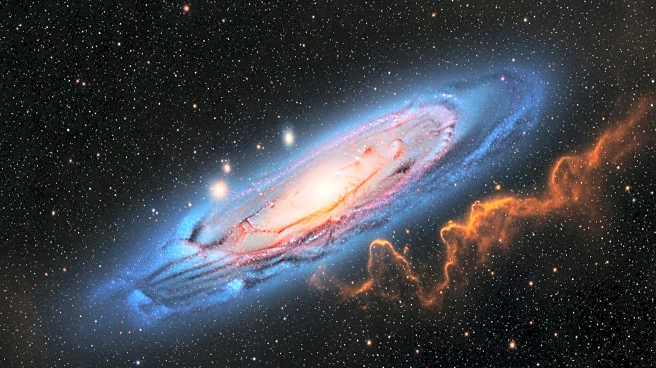
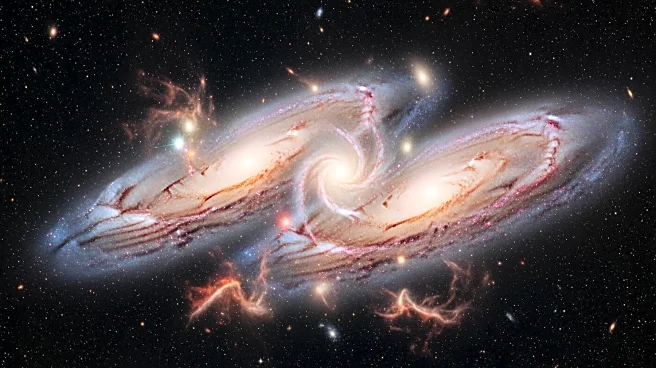
NASA's James Webb Space Telescope (JWST) has captured a detailed image of two spiral galaxies in the process of colliding. The galaxies, which passed close to each other millions of years ago, are now
engaged in a gravitational dance that will eventually lead to their merger into a single, larger galaxy. The mid-infrared data from JWST, combined with X-ray observations from NASA's Chandra X-ray Observatory, reveal the energetic processes and star formation regions triggered by the interaction.
Why It's Important?
The collision of spiral galaxies provides a unique opportunity to study the dynamics of galaxy interactions and the processes that lead to galaxy mergers. Such events are crucial for understanding the evolution of galaxies and the formation of new stars. The detailed observations from JWST and Chandra offer valuable insights into the complex gravitational interactions and energetic phenomena that occur during these cosmic events, contributing to our broader understanding of the universe.
What's Next?
Further analysis of the data from JWST and Chandra will help astronomers understand the long-term consequences of the galaxy collision. Researchers may conduct additional observations to track the ongoing interaction and study the resulting star formation and structural changes. These efforts could lead to new discoveries about the life cycles of galaxies and the role of mergers in cosmic evolution.