



What's Happening?
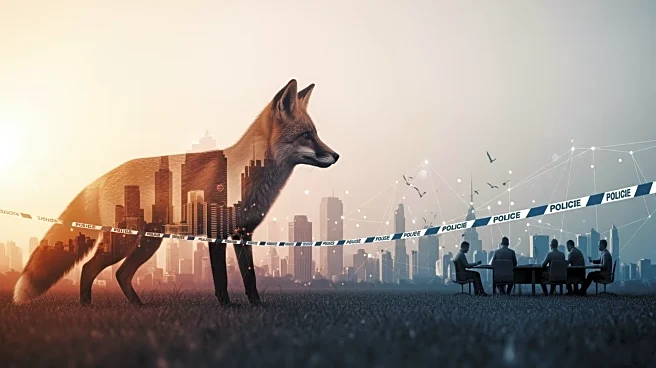
The presence of urban foxes, particularly the red fox (Vulpes vulpes), is increasing in cities like Cambridge, leading to discussions about their potential self-domestication. This process involves animals adapting to human environments, altering their behaviors
and physical traits through natural selection rather than human intervention. Studies have shown that urban foxes exhibit morphological changes such as shorter snouts and smaller brain cases compared to their rural counterparts. These changes are part of what researchers call the 'domestication syndrome,' which is commonly observed in domesticated species. Urban foxes are also displaying bolder behaviors, such as approaching novel food sources, which suggests a shift in their fear responses towards humans.
Why It's Important?
The potential self-domestication of urban foxes highlights the broader ecological impact of urbanization on wildlife. As cities expand, animals like foxes are forced to adapt to new environments, which can lead to significant changes in their behavior and physiology. This phenomenon raises important questions about the future of urban wildlife and the role humans play in shaping animal evolution. Understanding these changes is crucial for developing strategies to manage urban wildlife populations and mitigate potential conflicts between humans and animals. The adaptability of urban foxes also serves as a reminder of the resilience of wildlife in the face of human-induced environmental changes.
What's Next?
While urban foxes are showing signs of self-domestication, experts caution that they remain wild animals. Dr. Blake Morton, who has studied urban fox behavior, notes that complete domestication is unlikely to occur within our lifetimes and would take many generations. As urban areas continue to grow, the interaction between humans and wildlife will likely increase, necessitating further research into the behavioral and morphological changes of urban foxes. This research will help inform policies and practices for coexisting with urban wildlife, ensuring that both human and animal needs are met in increasingly shared environments.