



What's Happening?
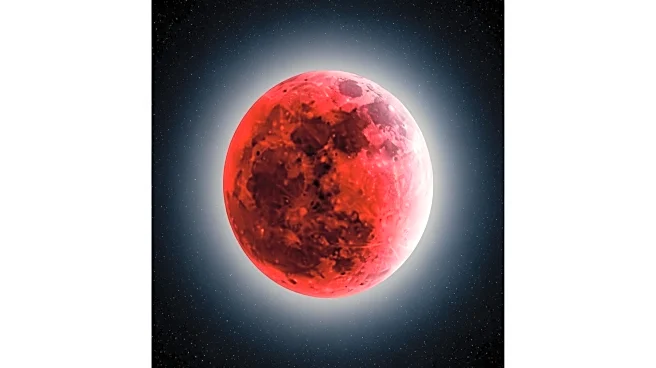
On March 3, 2026, a total lunar eclipse will occur, turning the moon a deep reddish-orange as it passes through Earth's shadow. This celestial event will be visible in the evening from eastern Asia and Australia, throughout the night in the Pacific, and in the early
morning in North and Central America. The eclipse will not be visible in Africa or Europe. During the eclipse, the moon will pass through different phases, including penumbral, partial, and total eclipse stages, each offering unique viewing experiences. The totality phase, when the moon is fully in Earth's umbra, will last for about an hour, providing ample time for observation.
Why It's Important?
Lunar eclipses are significant astronomical events that offer insights into the dynamics of celestial bodies and their interactions. They provide opportunities for scientific study and public engagement with astronomy. The reddish hue of the moon during a total eclipse, often referred to as a 'blood moon,' is a result of Earth's atmosphere filtering sunlight, projecting a spectrum of colors onto the lunar surface. This phenomenon can enhance public interest in space science and encourage educational activities. Additionally, such events can inspire cultural and artistic expressions, reflecting humanity's long-standing fascination with the moon.
What's Next?
Following the total lunar eclipse, skywatchers can anticipate a conjunction of Venus and Saturn on March 8, where the two planets will appear close to each other in the sky. This event will provide another opportunity for astronomical observation and public engagement. As the year progresses, additional celestial events will continue to captivate audiences and promote interest in space exploration and science. These events also offer opportunities for collaboration between scientific communities and the public, fostering a greater understanding of our universe.