







What's Happening?
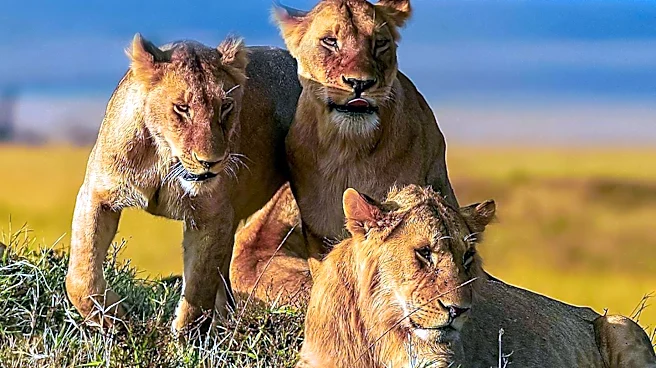
The Blood Lions campaign is an international initiative exposing the exploitation of lions in South Africa's commercial captive predator breeding industry. The campaign highlights unethical practices such as cub petting, walking with lions, and voluntourism,
which are described as insidious and forming part of a life cycle that ultimately supports canned hunting and the bone trade. Most South African predator facilities are identified as commercial operations that breed and exploit wildlife for various activities. The Blood Lions campaign serves as a compelling call to action, advocating for these practices to be stopped and the entire industry to be closed down. Additionally, the campaign points to growing scientific evidence suggesting that the captive lion breeding industry poses significant health risks to tourists, industry workers, and communities due to zoonotic diseases.
Why It's Important?
The Blood Lions campaign sheds light on a critical ethical and conservation issue with significant implications for wildlife welfare and public health. The exploitation of captive lions for tourist activities, such as cub petting and voluntourism, often masks a darker reality where these animals are bred for canned hunting or their bones. This not only perpetuates animal cruelty but also undermines genuine conservation efforts by creating a commercial demand for captive-bred predators. The potential for zoonotic disease transmission from these facilities to humans and other animals represents a serious public health concern, especially in a world increasingly aware of pandemic risks. For the U.S. and international tourism industry, this campaign serves as a stark warning about the need for responsible travel choices and avoiding attractions that contribute to such exploitative practices, thereby influencing consumer behavior and ethical tourism standards globally.
What's Next?
The Blood Lions campaign will likely continue its advocacy efforts to raise awareness and pressure governments and tourism operators to end the captive lion breeding industry in South Africa. This may involve further documentary releases, public awareness campaigns, and lobbying for stricter regulations or outright bans on related activities. International travel agencies and tour operators may face increased pressure from consumers and advocacy groups to cease promoting or partnering with facilities involved in these practices. The focus on zoonotic disease risks could also prompt health organizations and governments to investigate and implement measures to mitigate these dangers, potentially leading to more stringent health and safety protocols for wildlife interactions in tourism.
Beyond the Headlines
Beyond the immediate concerns of animal welfare and public health, the Blood Lions campaign touches upon deeper issues of human-wildlife interaction and the ethics of commercializing nature. It highlights how seemingly innocent tourist activities can be intertwined with complex, exploitative supply chains. The campaign challenges the perception of 'voluntourism' in this context, revealing how it can inadvertently support harmful industries rather than genuine conservation. This raises fundamental questions about the responsibility of tourists and the tourism industry to ensure their activities do not contribute to the exploitation of animals or the environment. It also underscores the need for greater transparency and accountability within wildlife tourism, pushing for a shift towards models that prioritize the well-being of animals and the integrity of ecosystems.