






What's Happening?
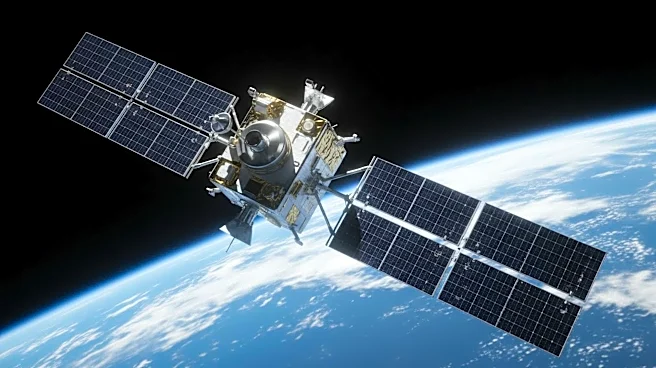
The U.S. Space Force has initiated a significant shift in its approach to orbital reconnaissance by entrusting private companies with intelligence operations. Recently, two spacecraft from commercial entities executed a complex rendezvous maneuver in orbit,
demonstrating the private sector's capability to quickly deploy surveillance on rival satellites. This operation, involving Rocket Lab and True Anomaly, was part of an exercise named Victus Haze. The exercise highlighted the ability to launch and position a spacecraft in orbit in under 17 hours, a feat that typically takes months. The Jackal interceptor, already in space, successfully located and captured images of the Puma spacecraft, which was launched by Rocket Lab. This maneuver was executed at speeds nearing 28,000 kilometers per hour, showcasing the rapid response capabilities of private companies in space operations.
Why It's Important?
This development marks a pivotal moment in space intelligence operations, as the U.S. Space Force increasingly relies on private companies to enhance its surveillance capabilities. The ability to quickly deploy and maneuver spacecraft for reconnaissance purposes is crucial in monitoring the activities of other nations, particularly Russia and China, which are frequently launching new systems into orbit. By leveraging the agility and innovation of the private sector, the U.S. can maintain a strategic advantage in space. This shift not only accelerates the pace of intelligence gathering but also reduces the time adversaries have to react, thereby strengthening national security. The involvement of private companies like True Anomaly, which has secured significant investment, underscores the growing role of commercial entities in national defense strategies.
What's Next?
In the coming weeks, further exercises are planned to test more complex scenarios, including evasive maneuvers and counter-inspection tactics. These exercises will refine the capabilities of private companies in conducting rapid and effective space reconnaissance. True Anomaly, having demonstrated its capabilities, is now competing for contracts under the U.S. Space Force's Andromeda program, which focuses on maneuverable intelligence missions. The success of these operations could lead to increased collaboration between the military and private sector, potentially reshaping the landscape of space intelligence and defense.