

What's Happening?
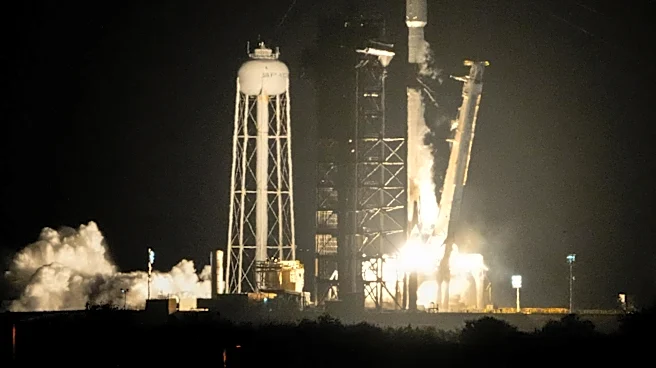
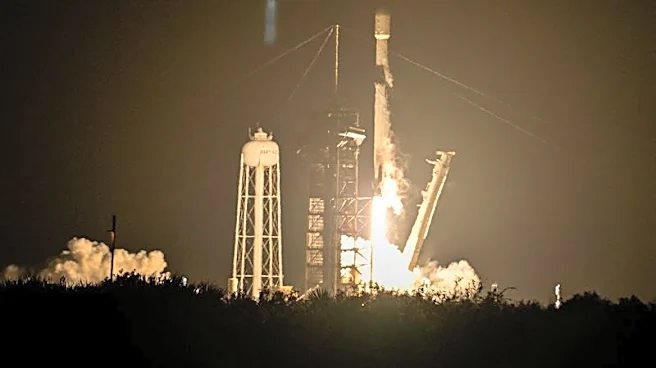
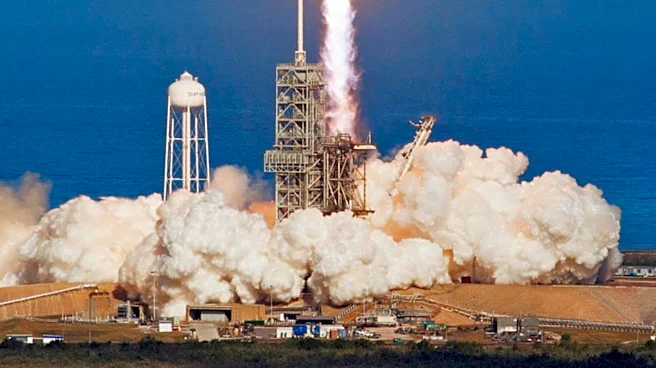
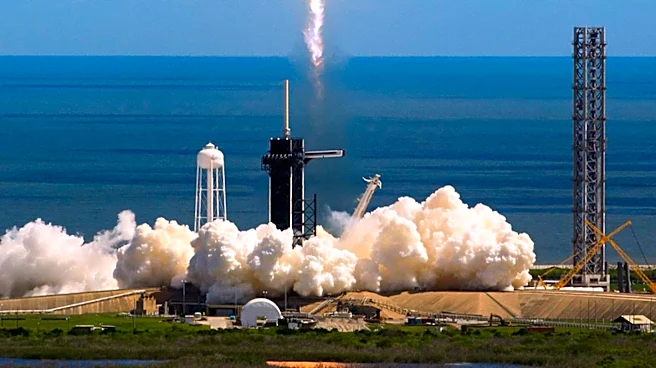
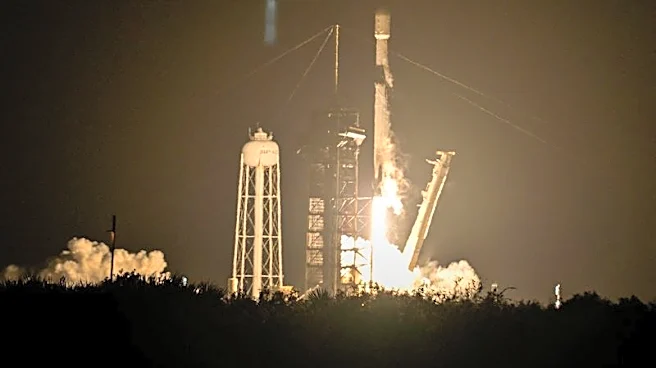
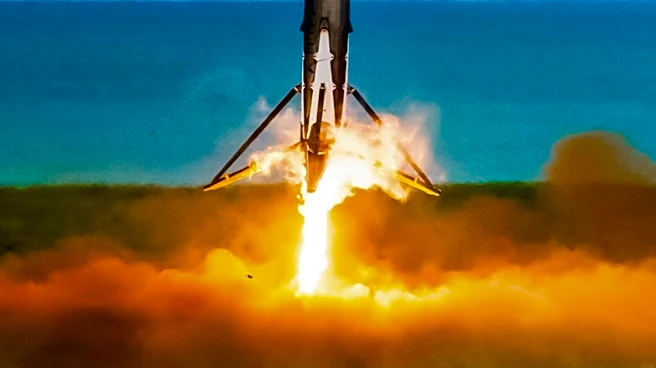
Scientists have confirmed that a SpaceX Falcon 9 rocket stage crashed into the Moon on August 5, 2026. The collision occurred after the rocket stage had been drifting in space for over a year. The impact site is near Einstein Crater on the Moon's sunlit
western limb. Although visual confirmation is pending, scientists are confident in the occurrence based on trajectory predictions. The crash created a significant crater and sent debris into space, but posed no threat to Earth.
Why It's Important?
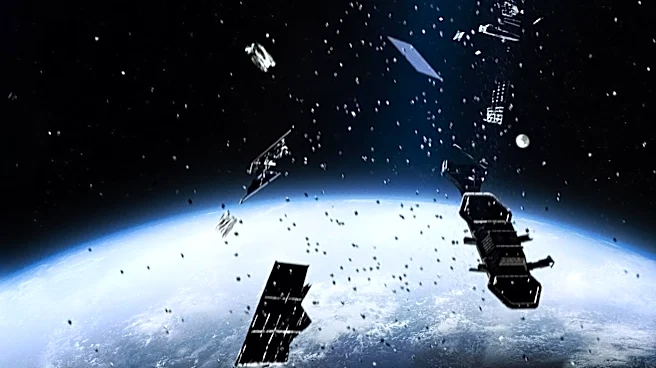
This event highlights the ongoing issue of space debris and its potential impact on celestial bodies. As space exploration efforts increase, the management of space junk becomes crucial to prevent unintended collisions. The crash serves as a reminder of the need for responsible disposal of space hardware. It also provides an opportunity for scientists to study the effects of such impacts on the Moon's surface, which can inform future missions and debris management strategies.
What's Next?
NASA's Lunar Reconnaissance Orbiter is expected to capture images of the impact site to provide visual confirmation and further study the effects of the crash. These observations will help refine models for tracking space debris and inform future space exploration policies. The incident may lead to discussions among space agencies and companies about improving protocols for the disposal of space hardware to prevent similar occurrences.