








What's Happening?
New York City is set to eliminate nearly 30,000 parking spots across its five boroughs to accommodate large garbage containers as part of the city's 'Empire Bin' program. This initiative, aimed at reducing trash bags on sidewalks and controlling rat populations,
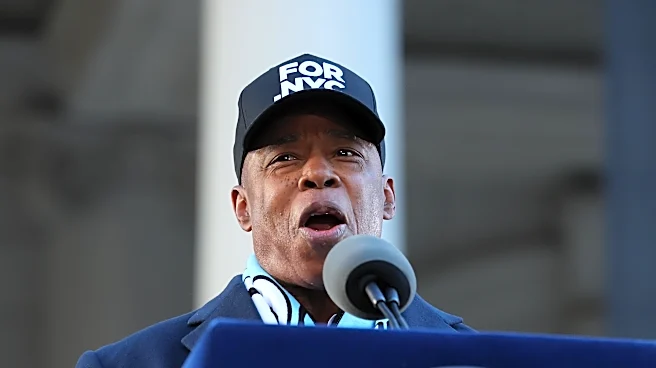
was detailed in a draft environmental impact statement by the Department of Sanitation. The program, which began under former Mayor Eric Adams and continues under Mayor Zohran Mamdani, seeks to 'containerize' city trash. The plan will see the installation of 66,000 Empire Bins by 2032, with upscale neighborhoods in Upper Manhattan expected to be most affected. The initiative has already been implemented in parts of West Harlem and is set to expand to Brooklyn by fall. The Department of Sanitation initially estimated that 150,000 parking spots might be needed for the project, but this number has been reduced significantly.
Why It's Important?
The removal of parking spaces for trash containerization reflects a significant shift in urban planning priorities, emphasizing cleanliness and public health over vehicle accommodation. This move could impact residents and businesses, particularly in densely populated areas where parking is already scarce. The initiative aims to improve the city's aesthetic and sanitary conditions, potentially enhancing the quality of life for residents. However, it also poses challenges for drivers who rely on street parking, potentially increasing demand for alternative transportation options. The program's success in West Harlem suggests potential benefits, but its broader implementation will test the city's ability to balance public health goals with residents' needs.
What's Next?
As the program expands, the city will continue to monitor its impact on parking availability and public satisfaction. The Department of Sanitation plans to extend the containerization to other boroughs, including the Bronx, Queens, and Staten Island, by 2027. Stakeholders, including local businesses and residents, may voice concerns or support, influencing potential adjustments to the plan. The city will likely explore additional measures to mitigate parking challenges, such as promoting public transportation and shared mobility solutions.