




What's Happening?
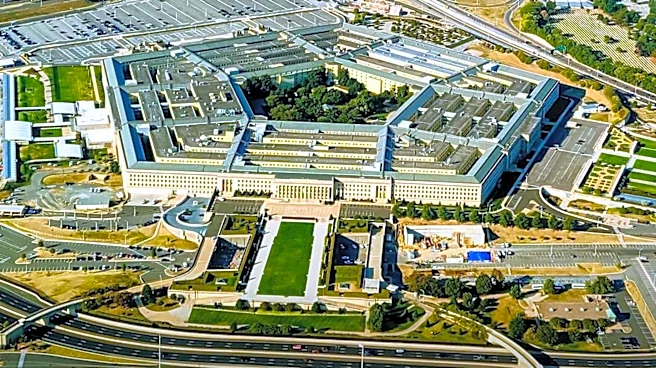
A federal judge has ordered the Defense Department to temporarily halt its policy requiring journalists to be accompanied by an official escort at the Pentagon. This decision comes as a result of a lawsuit filed by The New York Times, which argued that
the policy violated the First Amendment. U.S. District Judge Paul L. Friedman issued a preliminary ruling against the escort requirement, which was part of broader restrictions imposed by the Trump administration to limit media access. The ruling is seen as a legal setback for the administration's efforts to control media coverage of military activities. The New York Times has been engaged in a legal battle with the Defense Department, having sued twice in recent months over these restrictions. The Pentagon, however, expressed strong disagreement with the ruling, arguing that it compromises security by potentially allowing sensitive information to be exposed.
Why It's Important?
This ruling is significant as it underscores the ongoing tension between the U.S. media and the government regarding press freedom and access to information. The decision reaffirms the First Amendment rights of journalists, emphasizing the importance of transparency in military operations. For the media, this ruling is a victory in their efforts to maintain independent coverage of government activities without undue restrictions. On the other hand, the Pentagon's concerns highlight the delicate balance between national security and press freedom. The outcome of this legal battle could set a precedent for how media access is managed in sensitive government areas, impacting how the public receives information about military and defense matters.
What's Next?
The legal proceedings are expected to continue as the government may appeal the ruling. The Pentagon's response indicates that it will seek to reinstate some form of security measures to protect sensitive information. Meanwhile, The New York Times and other media outlets will likely continue to challenge any restrictions they view as unconstitutional. The broader media landscape will be watching closely, as the outcome could influence future policies on media access to government facilities. Stakeholders, including press freedom advocates and legal experts, will be analyzing the implications of this case for the rights of journalists and the public's right to know.