



What's Happening?
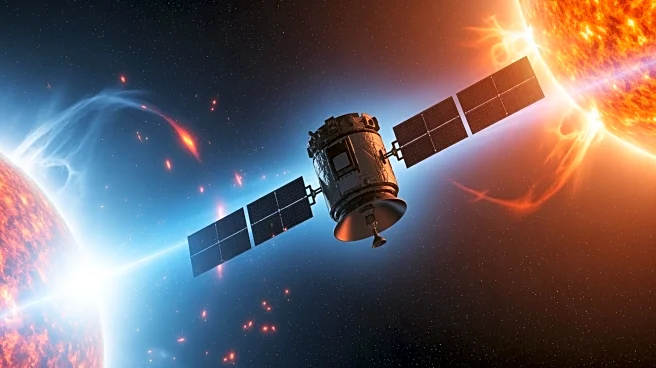
NASA's Van Allen Probe A, launched in 2012 to study Earth's radiation belts, is expected to make an uncontrolled reentry into Earth's atmosphere earlier than anticipated due to increased solar activity. The spacecraft, which has been inactive since 2019,
was initially predicted to reenter in 2034. However, the current solar cycle has increased atmospheric drag, accelerating its descent. While most of the probe is expected to disintegrate upon reentry, some components may survive. The risk of debris causing harm is low, with odds estimated at 1 in 4,200. The Van Allen Probe B is also expected to reenter before 2030.
Why It's Important?
The reentry of the Van Allen Probe A highlights the challenges of managing space debris and the impact of solar activity on satellite trajectories. The probe's mission contributed significantly to understanding Earth's radiation belts, which protect the planet from cosmic radiation and solar storms. The early reentry underscores the need for improved end-of-life planning for spacecraft to prevent potential collisions with active satellites. This event also raises awareness about the growing issue of space debris, which poses risks to both space missions and terrestrial safety.
What's Next?
NASA will continue to monitor the reentry of the Van Allen Probe A to ensure public safety and assess any potential impact. The agency's policies require that spacecraft be safely disposed of within 25 years of mission completion, either through controlled reentry or placement in a graveyard orbit. The increased awareness of space debris risks may lead to changes in future mission designs to minimize the chances of debris surviving reentry. Additionally, ongoing discussions about space debris management could result in new regulations and technologies to address this growing concern.