




What's Happening?
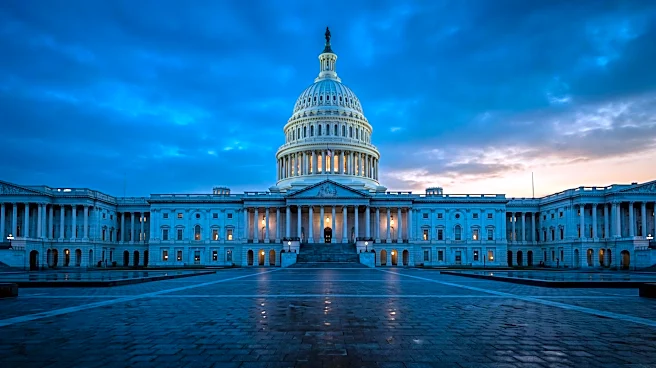
North Carolina Republican Senator Ted Budd testified before the Senate Appropriations Committee in July 2026, advocating for the inclusion of Hurricane Helene recovery aid in President Trump's $87.6 billion supplemental request. This request is primarily
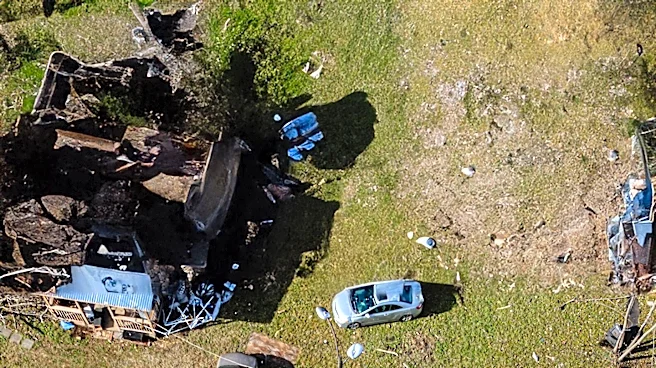
designated for the Pentagon and the war in Iran. Senator Budd highlighted the stalled recovery projects in western North Carolina, citing insufficient funding as the primary cause. He noted that debris continues to clog waterways, and essential facilities for drinking water and wastewater remain unrebuilt. Furthermore, many homeowners are still paying mortgages on properties that are either unlivable or have not yet been reconstructed, two years after Hurricane Helene devastated the region. President Trump had visited Swannanoa, North Carolina, in January 2025, promising aid to communities affected by the hurricane and appointing Michael Whatley as the recovery czar. However, the recovery has been described as painfully slow and uneven, with federal funding covering less than 16% of the estimated $60 billion in damages, a stark contrast to previous disaster responses where federal aid covered 73-78% of costs.
Why It's Important?
The slow and underfunded recovery in North Carolina following Hurricane Helene highlights significant challenges in the U.S. disaster response system, particularly under a weakened Federal Emergency Management Agency (FEMA). This situation serves as a critical test case for how the U.S. government handles increasingly destructive climate-fueled disasters. The federal government's reduced financial commitment, with only $9.3 billion allocated against $60 billion in estimated damages, places a substantial burden on state resources, as North Carolina has had to commit over $4 billion of its own funds. This shift in responsibility, potentially signaling a broader policy of pushing disaster response back to individual states, could have profound implications for communities nationwide, especially those vulnerable to natural catastrophes. The effectiveness of federal disaster relief directly impacts the economic stability and social well-being of affected regions, influencing everything from housing markets and infrastructure resilience to public health and local economies. The current scenario suggests a potential precedent for future disaster responses, where federal support may be significantly less robust, leaving states to bear a greater financial and logistical load.
What's Next?
The immediate next step involves Congress's decision on President Trump's supplemental request and whether it will incorporate the additional aid for Hurricane Helene recovery as urged by Senator Budd. The ongoing Senate election in North Carolina, where Michael Whatley's record as recovery czar is a central campaign issue, will likely keep the spotlight on the state's recovery efforts. His opponent, former North Carolina Governor Roy Cooper, has criticized Whatley's performance, making the federal response to Helene a key point of contention. This political scrutiny could influence future federal funding decisions and the administration's approach to disaster management. Furthermore, the broader implications of a potentially diminished FEMA and a policy shift towards state-led disaster response will continue to be debated. Communities across the U.S. will be closely watching how North Carolina's recovery progresses, as it may set a precedent for how future climate-related disasters are handled at the federal level.
Beyond the Headlines
The troubled recovery in North Carolina extends beyond immediate financial and logistical challenges, revealing deeper implications for federal governance and public trust. President Trump's past calls to abolish FEMA and his administration's actions, such as the significant loss of personnel and leadership instability within the agency, suggest a deliberate weakening of federal disaster response capabilities. This approach raises ethical questions about the federal government's responsibility to its citizens in times of crisis and the potential for political considerations to overshadow humanitarian needs. The appointment of individuals with limited disaster management experience to critical roles, such as Gregg Phillips heading FEMA's Office of Response and Recovery, further underscores concerns about competence and prioritization. The disparity in federal aid for Helene compared to past major hurricanes like Sandy, Katrina, and Maria indicates a significant policy shift that could disproportionately affect states with fewer resources. This situation could lead to increased social inequality, as vulnerable populations in disaster-prone areas may face prolonged suffering and displacement without adequate federal support, potentially eroding public confidence in governmental institutions.