
What's Happening?
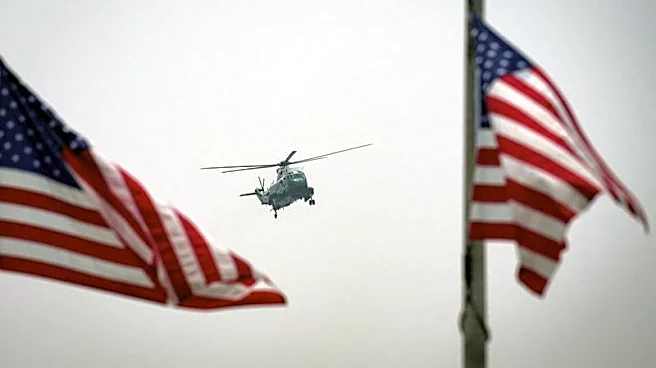
A preliminary report from the National Transportation Safety Board (NTSB) has revealed communication issues between air traffic control frequencies and Marine One, the helicopter carrying President Trump,
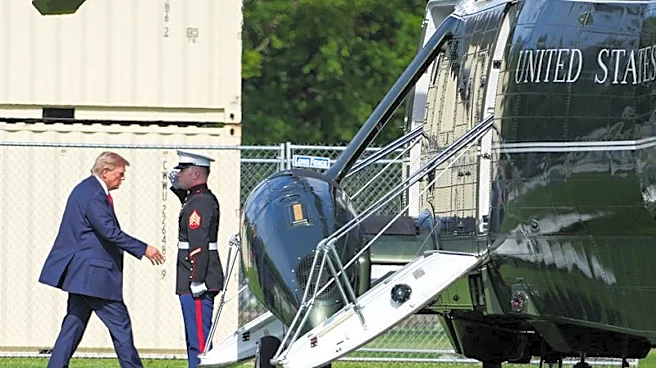
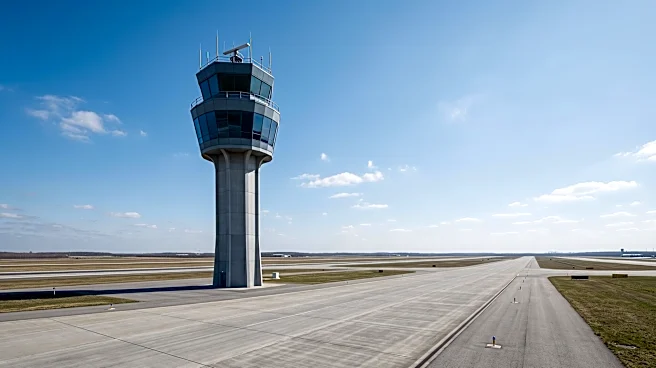
just before a passenger jet came too close to it. The incident occurred earlier this month as Marine One was departing from a temporary location at The Ellipse, south of the White House. The report indicates that Marine One made two unsuccessful attempts to contact Ronald Reagan Washington National Airport’s air traffic control tower; the first transmission was not received, and the second was unreadable. This communication breakdown led to a momentary loss of separation between Marine One and an American Airlines regional jet, which typically would not be allowed to take off when the President is departing. Construction at the White House was identified as a contributing factor, as it necessitated Marine One's temporary operating location, which lacked adequate line-of-sight for reliable communication between the radio transmitter/receiver and The Ellipse.
Why It's Important?
This incident highlights critical vulnerabilities in air traffic control communication protocols and infrastructure, particularly concerning presidential travel. The safety of the President is paramount, and any lapse in communication that could lead to a near-miss with commercial air traffic is a serious national security concern. The reliance on a temporary operating location due to White House construction underscores the need for robust contingency planning and adaptable communication systems for high-security operations. The Federal Aviation Administration (FAA) and other relevant agencies must ensure that all communication channels are infallible, especially when the President is in transit. This event could prompt a comprehensive review of communication systems, operational procedures, and temporary site assessments for presidential movements, potentially leading to significant upgrades and stricter protocols to prevent future occurrences.
What's Next?
The NTSB's investigation into the incident is ongoing. Following the August 4th event, the FAA took immediate action, including relocating an antenna to improve communication between air traffic controllers at Ronald Reagan Washington National Airport and Marine One pilots. The FAA also initiated a safety review panel and met with the White House Military Office helicopter unit to enhance coordination on lift notifications and boost signal frequencies. These measures suggest that further procedural changes and technological improvements are likely to be implemented. The findings from the ongoing NTSB investigation will likely inform additional recommendations for improving communication infrastructure and operational protocols for presidential air travel, especially when operating from non-standard locations. Stakeholders, including the FAA, military, and White House security personnel, will continue to collaborate to ensure the President's safety.
Beyond the Headlines
The incident extends beyond immediate safety concerns, touching upon the broader implications of infrastructure development and its impact on critical national operations. The fact that White House construction played a role in compromising communication capabilities for presidential transport raises questions about the foresight and planning involved in such projects. It suggests a potential disconnect between construction logistics and high-level security requirements. This event could lead to a re-evaluation of how construction projects near sensitive government facilities are managed, emphasizing the need for integrated planning that accounts for all operational contingencies, including those related to presidential security. Furthermore, it highlights the continuous challenge of maintaining secure and efficient operations in an evolving urban and technological landscape, where even seemingly minor changes can have significant security ramifications.