



What's Happening?
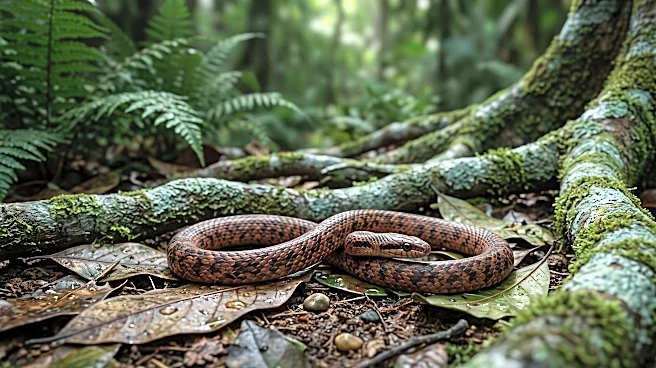
Scientists from the Field Museum in Chicago have officially named a newly identified, non-venomous groundsnake species from New Guinea 'Lielaphis slashi,' in tribute to Guns N' Roses guitarist Slash. The roughly 71-centimeter reddish-brown reptile, now
known as Slash's groundsnake, was first encountered in 2006 by Chris Austin, a professor and curator of herpetology at Louisiana State University's Museum of Natural Science, during fieldwork in New Guinea. Genetic testing confirmed that 'Lielaphis slashi' is distinct from other snakes in its genus. Slash, a self-proclaimed 'lifelong herpephile' and supporter of zoos and museums, expressed honor and humility at the recognition. Sara Ruane, the Field Museum's associate curator of herpetology and senior author of the paper describing the new species in Zootaxa, initiated the naming process due to her long-standing admiration for Slash's interest in reptiles.
Why It's Important?
The naming of 'Lielaphis slashi' is significant as it highlights the ongoing discovery of biodiversity in understudied regions like New Guinea, an island known for its extraordinary ecological richness. This act of naming not only formally recognizes a new species but also serves as a unique public awareness tool. By associating the snake with a globally recognized figure like Slash, scientists aim to draw attention to the importance of reptile conservation and the ecosystems they inhabit. This approach can help demystify snakes, which are often misunderstood, and underscore their vital role in the natural world. Furthermore, it emphasizes the critical need for continued scientific research and conservation efforts in areas facing environmental pressures, such as deforestation from coffee farming and mining. The collaboration between science and popular culture can effectively bridge the gap between academic research and public engagement, fostering greater appreciation for natural history.
What's Next?
The formal description and naming of 'Lielaphis slashi' will contribute to the broader understanding of New Guinea's biodiversity. Researchers will likely continue to study this species to learn more about its behavior, diet, and ecological role within its habitat. The attention generated by its unique name could lead to increased funding or public interest in herpetological research and conservation initiatives in New Guinea. Conservationists will continue to monitor the forests where Slash's groundsnake lives, as these areas are under threat from industrial activities. The hope is that the increased visibility of this species will translate into more robust protection measures for its habitat and other undiscovered species in the region. This event may also inspire other scientists to use creative naming conventions to raise awareness for lesser-known species and their conservation needs.
Beyond the Headlines
Beyond the immediate scientific discovery, the naming of 'Lielaphis slashi' delves into the fascinating intersection of science, celebrity, and public perception. It challenges the traditional, often austere, image of scientific nomenclature by injecting an element of popular culture. This strategy can be particularly effective in engaging a wider audience, including those who might not typically follow scientific news, in discussions about biodiversity and conservation. It also subtly reframes the public's view of scientists, showcasing their ability to connect with broader cultural phenomena. The story underscores the personal passions that often drive scientific pursuits, as exemplified by Dr. Ruane's childhood inspiration. Ultimately, this unique naming choice serves as a powerful reminder that conservation is not solely the domain of scientists but requires broad public engagement and appreciation for the natural world, even for creatures often perceived with fear or indifference.