
What's Happening?
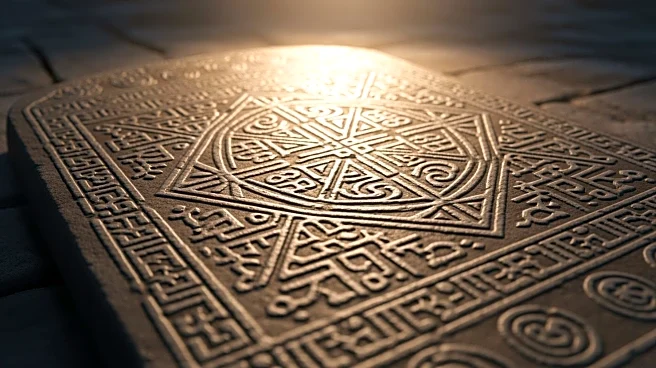
Researchers have used artificial intelligence to decode the rules of an ancient Roman board game from a stone artifact found in the Netherlands. The stone, featuring diagonal and straight lines, was analyzed
using 3D imaging to reveal wear patterns suggesting it was used as a game board. An AI program, trained with rules from 100 ancient games, generated possible rule sets, which were then cross-checked with the wear patterns to identify likely game movements. The game, believed to involve hunting and trapping the opponent's pieces, used glass, bone, or earthenware as game pieces. While the AI provided insights, researchers caution that the exact rules played by the Romans remain uncertain.
Why It's Important?
This research highlights the potential of artificial intelligence in uncovering historical and cultural insights from ancient artifacts. By decoding the rules of a previously unknown game, the study provides a glimpse into the recreational activities of ancient Roman society. It also demonstrates the interdisciplinary application of AI in archaeology, offering new methods to explore and understand historical artifacts. The findings contribute to the broader understanding of ancient games and their role in cultural and social contexts, potentially influencing future archaeological research and methodologies.