




What's Happening?
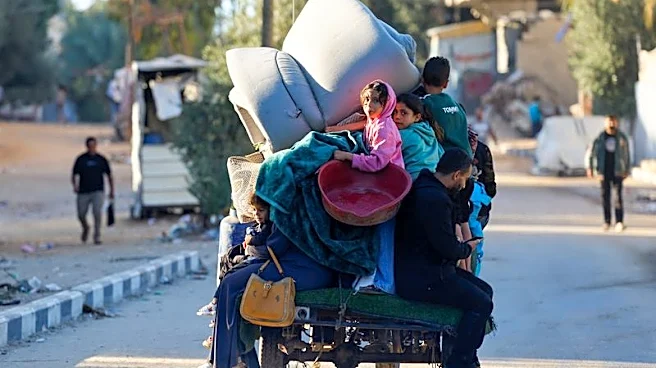
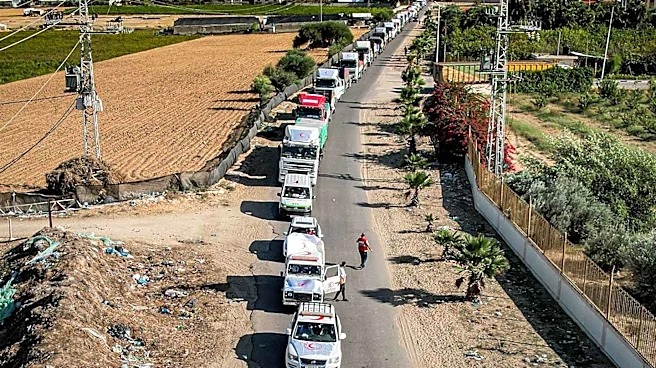
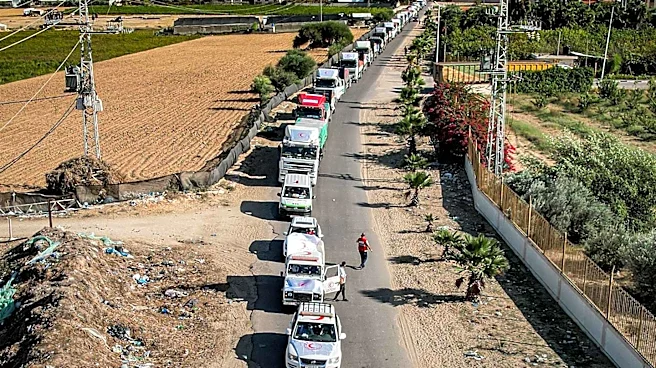
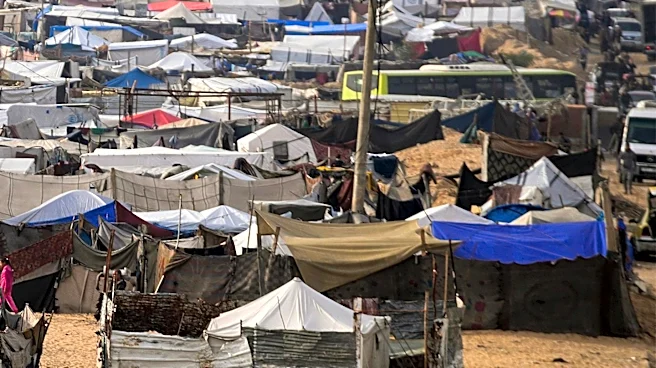
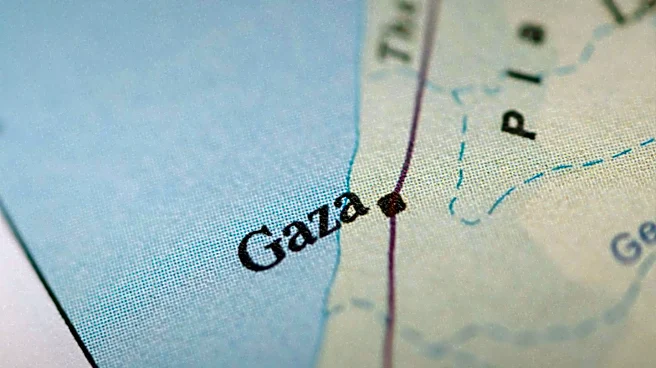
Palestinians are reportedly fleeing an announced Israeli military operation in Deir al-Balah, located in the Gaza Strip, specifically beyond the "Yellow Line." UN humanitarian officials reported this displacement on Wednesday. Initial assessments indicate
that over 18,000 people reside in the affected area, which spans approximately 2.5 square kilometers, with about 4,000 of them already living in displacement sites. The UN Office for the Coordination of Humanitarian Affairs (OCHA) noted that several humanitarian facilities providing essential services like healthcare, water, food, and education are also located within this zone. As of Wednesday, residents were observed moving westward and southwestward. OCHA records show that six Israeli displacement orders have been issued in this same area between December 2023 and June 2025, emphasizing a pattern of repeated displacement for civilians in the region.
Why It's Important?
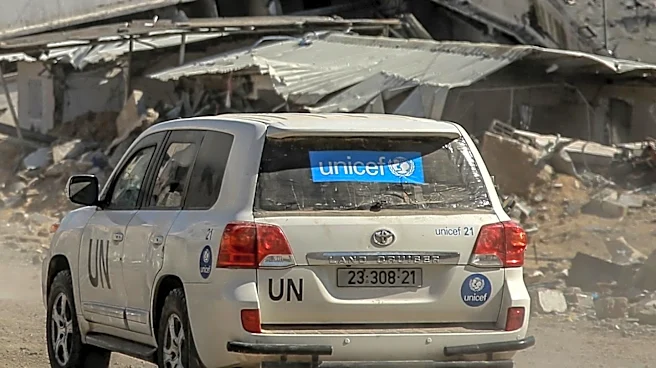
This displacement event in Deir al-Balah underscores the severe humanitarian impact of ongoing military operations on the civilian population in Gaza. The repeated issuance of displacement orders in the same area highlights a persistent cycle of disruption and insecurity for residents, making it difficult for them to establish any sense of stability or rebuild their lives. The presence of numerous humanitarian facilities in the affected zone means that essential services for thousands of people are at risk of disruption or damage, further exacerbating an already dire humanitarian situation. The UN's call for the protection of civilians and humanitarian infrastructure under international humanitarian law emphasizes the critical need for all parties to adhere to these principles, especially in densely populated areas where civilian lives and essential services are highly vulnerable. The potential overflow of rainwater and sewage collectors due to damage also poses significant public health risks.
What's Next?
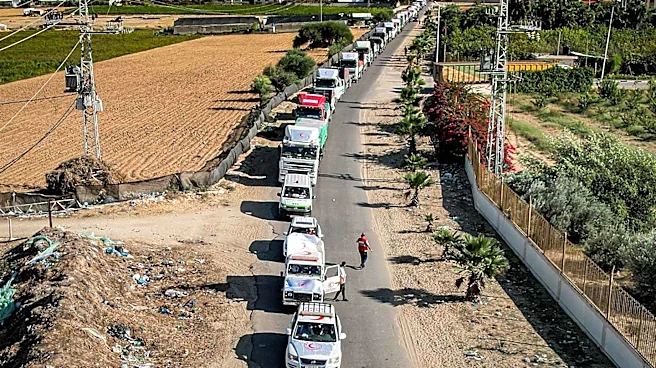
As the Israeli military operation proceeds, the immediate concern is the safety and well-being of the displaced Palestinian population. Humanitarian organizations will likely focus on providing aid and support to those moving to new areas, while also assessing the damage to existing infrastructure and humanitarian facilities. The UN's call for civilians to be allowed to return as soon as circumstances permit, and for their protection and access to aid, will be a key point of advocacy. The World Health Organization (WHO) has also reiterated the need to improve conditions for medical evacuations through the Rafah crossing, suggesting that the broader humanitarian response will require sustained international attention and coordination. The long-term implications will depend on the duration and intensity of the military operation and the subsequent efforts to rebuild and restore essential services.
Beyond the Headlines
The situation in Deir al-Balah reflects a broader pattern of displacement and humanitarian crisis in the Gaza Strip, where civilians frequently bear the brunt of conflict. The repeated displacement orders in the same area raise questions about the long-term viability of civilian life and the potential for permanent demographic shifts. This ongoing cycle of displacement can lead to profound psychological trauma, loss of livelihoods, and a breakdown of social structures, creating a protracted humanitarian emergency. The vulnerability of essential services, including water and sanitation infrastructure, highlights the systemic challenges in providing basic necessities in a conflict zone, with potential long-term public health consequences. The international community's response to such events often involves a delicate balance between humanitarian intervention and political engagement, underscoring the complex interplay of aid, diplomacy, and conflict resolution.