



What's Happening?
China has demonstrated significant growth in its export performance, particularly in AI-related goods and electromechanical products, during the first quarter of 2026. The country's overall exports increased by 11.9%, with electromechanical products experiencing
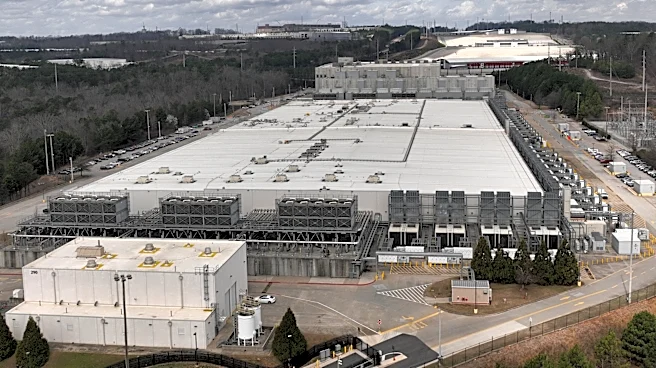
a 21.4% year-on-year surge. This growth is largely attributed to the robust demand for data center-related goods, such as power generation equipment and energy storage systems. China has emerged as the world's largest exporter of AI-related goods, accounting for 19% of global exports in 2025, and continues to show resilience with a 14.7% year-on-year growth in Q1. The expansion extends beyond AI-supportive infrastructure to components directly powering AI computation, with exports of memory and processor components surging by 39.1%. Companies like Zhongji InnoLight have reported significant profit increases due to this expansion.
Why It's Important?
China's position as a leading supplier in the global AI supply chain has significant implications for international markets. The country's ability to provide stable and cost-effective supply chains supports the rapid expansion of AI technologies worldwide. This growth not only fills global supply gaps but also enhances China's influence in the tech industry. The increase in exports of critical components like memory and processors underscores China's strategic role in the global tech ecosystem. As geopolitical tensions and supply chain disruptions continue, China's dominance in AI-related exports provides a stabilizing force for the global market, ensuring continued innovation and development in AI technologies.
What's Next?
China's continued expansion in AI-related exports is likely to influence global supply chain dynamics further. As demand for AI technologies grows, China's role as a primary supplier will become increasingly critical. The country's manufacturing sector is expected to maintain its growth trajectory, driven by strong demand from international markets. Companies involved in AI infrastructure and component production may continue to see increased profits and market share. Additionally, China's strategic positioning in the AI supply chain may lead to further investments in technology and infrastructure to support this growth.