






What's Happening?
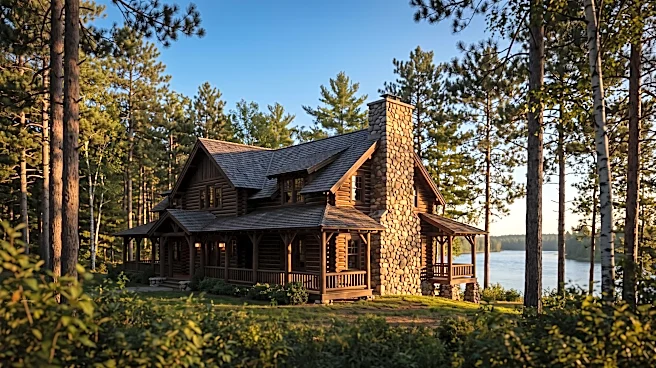
The Mishe Mokwa Lodge, a historic private retreat near the St. Croix River in Wisconsin, has deep connections to the John Deere family dating back to the nineteenth century. Relatives and descendants of John Deere, intertwined through marriage with the Butterworth
and Velie families, were members of the Mishe Mokwa Club. John Deere’s grandson, Charles Deere Velie, was either an original member or began visiting the lodge in the 1890s. Charles Deere Velie, born in 1861, rose through the ranks at Deere and Company to become a territorial manager and a member of the board of directors until his death in 1929. His son, Charles Koon Velie, purchased the Mishe Mokwa property in 1934, and the Velie family owned the lodge until 1978. Additionally, Nathaniel French, a judge from Davenport, Iowa, and co-founder of French and Hecht/Davenport Wagon Wheel Co., a major supplier of metal wheels for John Deere Company, was also an early owner of the Mishe Mokwa Club.
Why It's Important?
This historical revelation provides insight into the recreational and social lives of prominent industrial families in the late 19th and early 20th centuries, particularly those connected to significant American companies like John Deere. It highlights how the wealth generated from industrialization enabled these families to establish exclusive private retreats, reflecting a distinct lifestyle of the Gilded Age elite. The Mishe Mokwa Lodge, with its rustic architecture and focus on activities like trout fishing, exemplifies how these influential figures sought leisure and socialized away from their business endeavors. The connection also underscores the interconnectedness of prominent families and businesses of the era, where personal relationships and shared social circles often overlapped with professional networks, influencing both their private lives and the broader economic landscape of the time.
What's Next?
While the Mishe Mokwa Lodge was dismantled in 2013 due to deterioration, its history continues to be preserved and studied by community historians. Research into such historical sites and the families associated with them contributes to a richer understanding of American industrial and social history. Future historical analyses may further explore the broader implications of these elite social networks on regional development, conservation efforts, and the evolution of leisure activities. The documentation of the lodge's history, including oral interviews and photographic archives, ensures that the legacy of these prominent families and their contributions to both industry and society are not lost, providing valuable context for understanding the past and its influence on contemporary American culture and business practices.
Beyond the Headlines
The story of the Mishe Mokwa Lodge and its ties to the John Deere family extends beyond mere historical anecdote, offering a glimpse into the cultural values and social structures of America's industrial elite. The preference for private, exclusive lodges over public resorts reflects a desire for controlled environments and a distinct social hierarchy. This historical context sheds light on the origins of certain recreational land ownership patterns and the early conservation efforts, as these wealthy individuals often acquired vast tracts of land for their private enjoyment, inadvertently preserving natural areas. The lodge's eventual dismantling also serves as a poignant reminder of the impermanence of even grand structures and the continuous evolution of land use and historical preservation challenges in the U.S. It underscores the importance of documenting these sites to understand the full tapestry of American heritage.