




What's Happening?
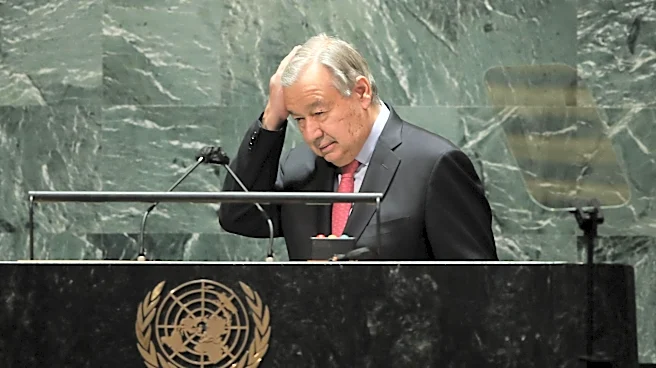
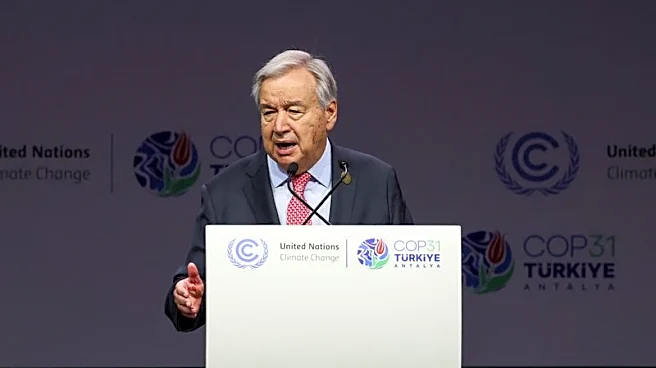
UN Secretary-General António Guterres is delivering a final, urgent message to world leaders regarding climate change as his second and last term concludes at the end of the year. He emphasizes that 'This is a moment of truth' and that there is no more
time for delay or shifting responsibility. Guterres will convey this message at the upcoming UN climate conference, COP31, scheduled for November 9-20. He has consistently used strong language to highlight the climate crisis, previously stating that 'the era of global boiling has arrived.' His urgency stems from worsening global conditions, including killer heat waves, storms, floods, and droughts, exacerbated by rising temperatures and the El Niño climate pattern. Guterres shared that a conversation with scientists last year, who informed him that the 2015 Paris Agreement's goal of limiting warming to 1.5 degrees Celsius was no longer achievable, was a significant shock and 'one of the most difficult days of my life.'
Why It's Important?
The Secretary-General's stark warning underscores the critical juncture the world faces in addressing climate change, with significant implications for the U.S. and global communities. His assertion that political leadership has failed to adequately address the crisis highlights a need for more decisive policy action, which could influence U.S. climate policy and international cooperation. The call for immediate and collective action suggests that countries, including the U.S., will face increased pressure to commit to more ambitious emissions reduction targets and invest in renewable energy. The emphasis on taxing 'windfall profits' of fossil fuel companies to support countries most affected by climate change could spark debates on energy policy, corporate responsibility, and international aid within the U.S. and among its allies. The potential for more frequent and intense extreme weather events, as described by Guterres, poses direct threats to U.S. infrastructure, agriculture, and public health, necessitating substantial investments in climate resilience and adaptation strategies.
What's Next?
The upcoming COP31 conference, where Secretary-General Guterres will deliver his message, is expected to be a critical forum for international climate negotiations. World leaders, including representatives from the U.S., will be pressed to demonstrate concrete commitments and actions to combat climate change. Guterres's call for taxing fossil fuel companies' profits could lead to renewed discussions on carbon pricing mechanisms, green taxes, and financial aid for developing nations, potentially influencing U.S. legislative efforts and international agreements. The ongoing selection of the next UN Secretary-General will also be significant, as Guterres advises his successor to 'Tell the truth' about the climate crisis, indicating a continued focus on strong advocacy from the UN. The increasing frequency of extreme weather events will likely intensify public and political pressure for more robust climate policies and investments in sustainable solutions across the U.S.
Beyond the Headlines
Secretary-General Guterres's candid admission about the unlikelihood of meeting the 1.5-degree Celsius warming target represents a profound shift in the global climate discourse. This acknowledgment moves beyond traditional calls for prevention to a more urgent focus on adaptation and mitigating the inevitable consequences of climate change. It raises ethical questions about intergenerational equity and the responsibility of current leaders to future generations. The 'sense of fury' Guterres expressed towards those who refuse to take necessary measures highlights a growing moral imperative in the climate movement, potentially leading to increased activism and legal challenges against governments and corporations perceived as hindering climate action. His emphasis on the lack of a long-term strategic view in many political systems points to a fundamental challenge in democratic governance, where short electoral cycles often conflict with the long-term nature of climate solutions. This could prompt deeper discussions on governance structures and policy frameworks that can better address existential threats.