










What's Happening?
The Federal Bureau of Investigation (FBI) has decided to defer investigations involving alleged assaults on immigration agents to Homeland Security Investigations (HSI). This decision follows recent fatal shootings by federal immigration officers in Texas
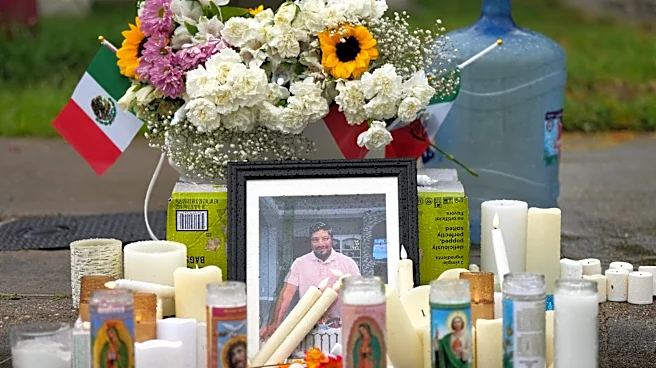
and Maine. On July 7, an Immigration and Customs Enforcement (ICE) officer shot and killed a Mexican national in Houston, and shortly after, another ICE officer killed a Colombian man in Biddeford, Maine. The FBI's decision to transfer these cases to HSI, a branch of ICE, means that the immigration enforcement agency will be investigating incidents involving its own agents. This move has raised concerns among current and former federal law enforcement officials, as HSI is not typically equipped to handle core elements of such investigations, including ballistics analysis and forensic processing.
Why It's Important?
This shift in investigative responsibility is significant as it highlights potential conflicts of interest, with HSI investigating its own agents. The decision could impact the transparency and impartiality of investigations into incidents involving immigration enforcement officers. The change also reflects ongoing tensions within federal law enforcement agencies regarding the handling of such cases. The Justice Department's previous pressure on the FBI to treat certain investigations as assaults on federal officers rather than civil rights cases has already led to resignations among prosecutors and FBI agents. This development could further strain relationships between federal agencies and affect public trust in the accountability of immigration enforcement actions.
What's Next?
The decision to transfer investigations to HSI may lead to increased scrutiny from civil rights groups and lawmakers concerned about the impartiality of such investigations. There may be calls for oversight or legislative action to ensure that investigations into officer-involved shootings are conducted transparently and without bias. Additionally, the ongoing investigation into the fatal shooting of Alex Pretti in Minneapolis, which is being led by the FBI and the Civil Rights Division, may set a precedent for how future cases are handled. Stakeholders will likely monitor the outcomes of these investigations closely to assess the effectiveness and fairness of the new approach.