




What's Happening?
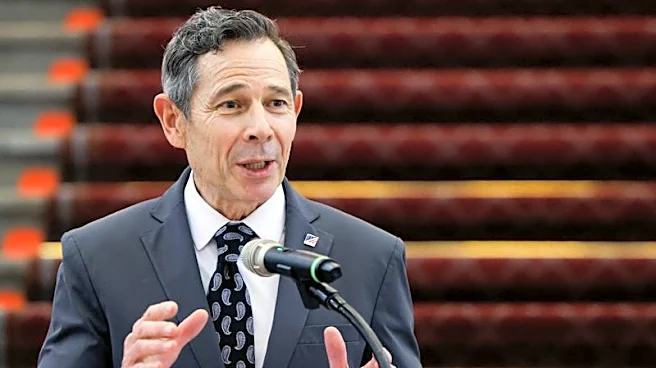
Utah Governor Spencer Cox has ceremonially signed the Recovery Utah Initiative Executive Order at the Utah State Capitol. This statewide initiative adopts a comprehensive, whole-of-government strategy to support Utah residents grappling with addiction,
homelessness, and mental illness. The primary goal is to facilitate long-term recovery, stability, and self-sufficiency for these individuals. The signing event was attended by Great American Recovery Co-Chair Kathryn Burgum and Interim Executive Director Dr. Monty Burks, highlighting a collaborative effort to strengthen coordination across various government agencies and community organizations. This initiative aligns with the broader objectives of the Great American Recovery Initiative, which seeks to expand pathways to lasting recovery nationwide. The executive order signifies a concerted effort by the state of Utah to address complex societal challenges through integrated support systems.
Why It's Important?
The Recovery Utah Initiative is significant because it addresses critical public health and social welfare issues that impact a substantial portion of the U.S. population. By focusing on addiction, homelessness, and mental illness, the initiative targets interconnected problems that often lead to cycles of instability and hardship. A whole-of-government approach means that various state departments and agencies will coordinate their efforts, potentially leading to more efficient resource allocation and more effective interventions. This integrated strategy can serve as a model for other states facing similar challenges, demonstrating how a unified governmental response can create more robust support systems. The emphasis on long-term recovery, stability, and self-sufficiency aims to not only alleviate immediate crises but also to empower individuals to become productive members of society, reducing the long-term societal and economic costs associated with these issues.
What's Next?
Following the ceremonial signing, the Recovery Utah Initiative will move into its implementation phase, requiring various state agencies to integrate and coordinate their services. This will likely involve developing new protocols for inter-agency cooperation, allocating resources to specific programs, and establishing metrics to track progress and outcomes. Stakeholders, including healthcare providers, social workers, housing authorities, and community organizations, will need to collaborate closely to ensure a seamless delivery of services. The initiative's success will depend on ongoing evaluation and adaptation, with potential adjustments made based on feedback and observed results. Other states and federal agencies will likely monitor Utah's progress, potentially drawing lessons for their own recovery and support programs. Continued engagement from leaders like Governor Cox, Kathryn Burgum, and Dr. Monty Burks will be crucial for maintaining momentum and ensuring the initiative achieves its ambitious goals.
Beyond the Headlines
This initiative reflects a growing recognition across the U.S. that addiction, homelessness, and mental illness are not isolated problems but rather complex issues requiring holistic solutions. The 'whole-of-government' approach signifies a shift away from siloed departmental efforts towards a more integrated and person-centered model of care. This could lead to a re-evaluation of how public services are structured and delivered, emphasizing prevention, early intervention, and sustained support rather than reactive crisis management. Ethically, the initiative underscores a commitment to human dignity and the belief that all individuals deserve the opportunity for recovery and self-sufficiency. Culturally, it may help destigmatize these conditions by framing them as public health challenges that require collective societal responses, rather than individual failings. The long-term impact could be a more compassionate and effective social safety net, fostering greater community resilience and well-being.