


What's Happening?
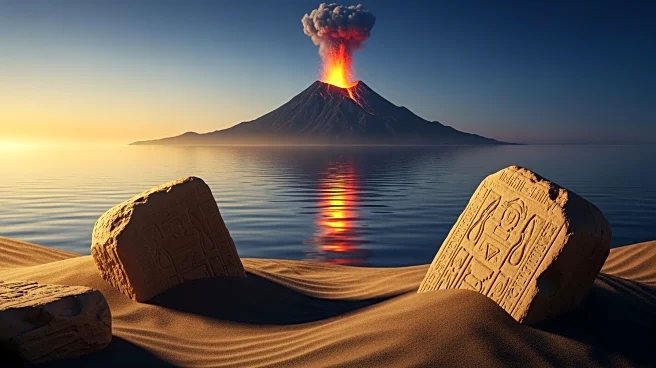
A team of researchers from Ben-Gurion University of the Negev and the University of Groningen has proposed a revised timeline for ancient Egypt, suggesting that the massive volcanic eruption on the Greek island of Thera (Santorini) occurred earlier than
previously thought. This eruption, one of the most significant volcanic events in the past 10,000 years, has been a subject of debate among archaeologists regarding its timing and impact on ancient Egyptian chronology. The new radiocarbon dates related to King Ahmose, who is known for reunifying Upper and Lower Egypt and founding the New Kingdom, indicate that the eruption took place during the Second Intermediate Period, rather than the New Kingdom. This finding suggests a 'low' timeline for the start of the 18th Dynasty, reshaping the understanding of Egypt's interactions with neighboring cultures.
Why It's Important?
The revised timeline has significant implications for the study of ancient Egyptian history and its interactions with other cultures in the eastern Mediterranean. By placing the Santorini eruption in the Second Intermediate Period, researchers can better understand the chronological framework of events and cultural exchanges during this era. This shift in timeline could lead to a reevaluation of historical narratives and archaeological interpretations related to the New Kingdom and its predecessors. The findings also highlight the importance of radiocarbon dating in resolving longstanding historical debates and enhancing the accuracy of ancient chronologies.
What's Next?
Further research and analysis of additional artifacts and historical records may be conducted to corroborate the new timeline and explore its broader implications. Archaeologists and historians may revisit existing theories and interpretations of ancient Egyptian history in light of these findings. The study may also prompt similar investigations into other historical events and periods where timelines remain uncertain or contested.