





What's Happening?
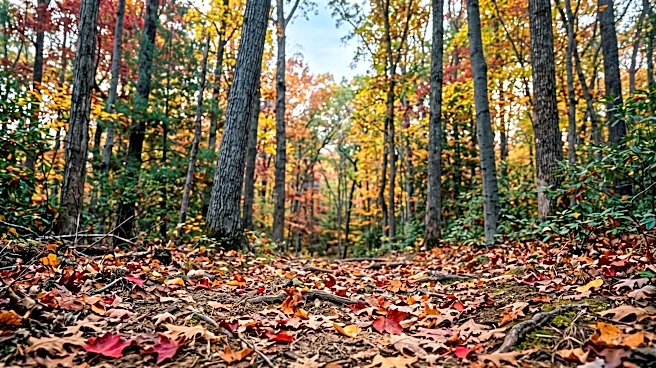
Annapolis and the Eastern Shore of Maryland have reached their peak fall foliage, displaying vibrant colors of bold maples and ochre oaks, according to the Maryland Department of Natural Resources (DNR). This marks the best viewing window for the Bay-area
and the last for much of the state. Western Maryland is now past its peak, with leaves falling despite calm, dry weather. The DNR's November 5 foliage report indicates that Baltimore County and the Mid-Shore are also at peak, while Somerset and Worcester counties are approaching or at peak, respectively. Concurrently, the DNR has issued a warning that the end of foliage season signifies the beginning of fall wildfire season, urging residents to exercise extreme caution with outdoor fires due to dry, leaf-covered ground.
Why It's Important?
The peak fall foliage season is a significant draw for tourism and local recreation, contributing to the regional economy through increased visitation to parks, scenic routes, and local businesses. The DNR's timely reports help residents and tourists plan their activities, maximizing the economic benefit of this natural spectacle. However, the concurrent warning about the start of fall wildfire season is critically important for public safety and environmental protection. Wildfires pose a severe threat to natural habitats, property, and human lives, particularly when dry leaves create highly flammable conditions. The DNR's emphasis on human-caused fires, especially from debris burning, highlights the need for public awareness and responsible behavior to prevent ecological damage and economic losses associated with fire suppression and recovery.
What's Next?
As the fall foliage season concludes, Maryland residents and visitors should heed the DNR's warning regarding the heightened risk of wildfires. The agency's call for caution with outdoor fires, particularly debris burning, will be crucial in preventing incidents. The DNR also highlighted its Community Forestry Catalyst Fund, which provides funding for tree care and urban forestry projects to local governments, nonprofits, schools, and community associations. The next application deadline for this fund is January 15, 2027. This initiative aims to support long-term environmental health and community greening efforts. Additionally, the report noted celestial events, with a thin crescent moon and Venus rising side by side on Saturday morning, November 7, offering a unique sky-watching opportunity.
Beyond the Headlines
The annual cycle of fall foliage and the subsequent wildfire season in Maryland underscore the delicate balance between natural beauty and environmental vulnerability. The DNR's dual role in promoting tourism and issuing safety warnings reflects the complex challenges of managing natural resources in a populated state. The emphasis on human-caused wildfires points to a broader societal issue of environmental responsibility and the impact of individual actions on collective well-being. The Community Forestry Catalyst Fund, while practical, also highlights the increasing recognition of urban forestry's role in climate resilience, air quality, and public health. This initiative suggests a proactive approach to environmental stewardship, moving beyond reactive measures to foster sustainable practices. The inclusion of celestial events in the report also subtly connects local environmental awareness with a broader cosmic perspective, encouraging a holistic appreciation of nature.