




What's Happening?
Mercy Corps, an international aid organization, is grappling with significant challenges in responding to the Ebola outbreak in the Democratic Republic of Congo (DRC). The outbreak, which has resulted in over 1,500 deaths, is the fastest-growing in the region's
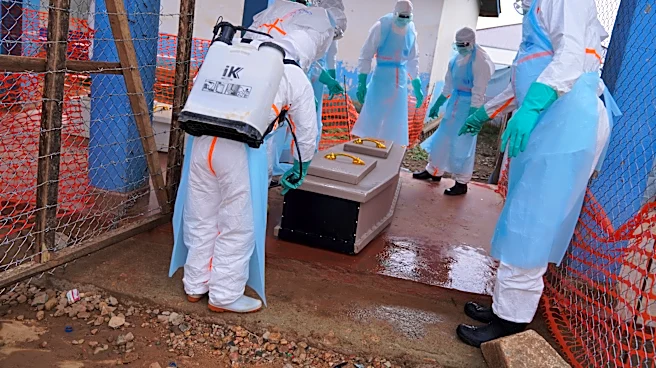
history. Mercy Corps' teams are finding it increasingly difficult to reach affected communities due to community mistrust, insecurity from armed conflicts, and gaps in healthcare infrastructure. Onesphore Bangenza, the Ebola response team leader for Mercy Corps in Bunia, highlighted the alarming rate of new cases, which are comparable to the 2018-2020 outbreak. The organization is also facing shortages in basic supplies necessary for safe burials, further complicating containment efforts.
Why It's Important?
The rapid spread of Ebola in the DRC poses a significant threat to public health and regional stability. The challenges faced by Mercy Corps and other aid organizations underscore the need for improved healthcare infrastructure and community engagement to effectively manage such outbreaks. The situation highlights the vulnerability of regions with ongoing conflicts, where healthcare delivery is severely hampered. The outbreak's escalation could lead to broader international health concerns, necessitating a coordinated global response to prevent further spread and mitigate the impact on affected communities.
What's Next?
Efforts to contain the outbreak will require enhanced coordination among international aid organizations, local governments, and communities. Mercy Corps and other stakeholders will need to address the root causes of community mistrust and improve healthcare access to effectively manage the crisis. The international community may need to increase support, both in terms of funding and personnel, to bolster the response efforts. Monitoring the situation closely will be crucial to adapting strategies and ensuring that containment measures are effective.
Beyond the Headlines
The outbreak in the DRC highlights the ethical and logistical challenges of managing health crises in conflict zones. The need for culturally sensitive approaches to healthcare delivery and burial practices is critical to gaining community trust. Additionally, the situation raises questions about the global preparedness for handling infectious disease outbreaks in politically unstable regions. Long-term solutions will require addressing the underlying socio-political issues that exacerbate health crises.