






What's Happening?
An Apopka, Florida property is facing substantial fines, including a $1,000-per-day penalty, due to extensive code violations and debris accumulation. The property, located on Partnership Hills Drive, has been the subject of a code enforcement case since
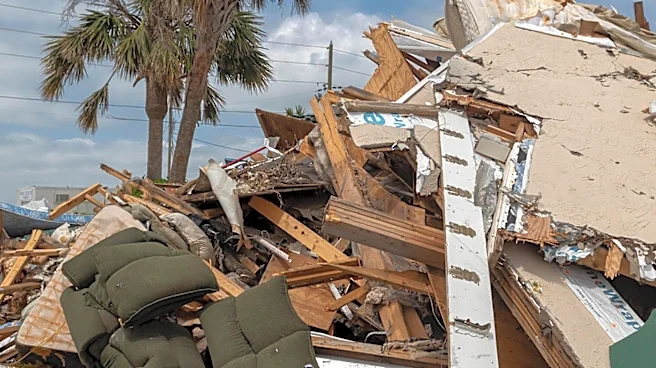
April, initiated by Apopka Code Enforcement. Inspections have documented numerous issues, such as open outdoor storage of trash, junk, and debris, inoperative vehicles, lack of running water or electricity, unsanitary exterior surfaces, peeling paint, and an unsecured structure. Neighbors, including 84-year-old Ivera Crittenden, have expressed frustration over the worsening conditions, which have persisted despite city intervention. A hearing before an Apopka Special Magistrate on August 18 found the property in violation, imposing a 15-day compliance period, followed by the daily fines and a separate one-time $1,000 fine. The property owner's son reportedly contacted the city after the hearing, but a September inspection revealed no change in conditions, leading to an affidavit of non-compliance issued on September 8.
Why It's Important?
This situation highlights the challenges local governments face in enforcing code compliance and maintaining community standards, particularly when property owners are unresponsive. The accumulation of significant fines, while intended to compel action, does not always result in immediate resolution, leaving neighboring residents to contend with deteriorating conditions that can impact their quality of life and property values. The case also underscores the administrative and legal processes involved in code enforcement, which can be time-consuming and frustrating for residents seeking prompt solutions. Furthermore, the Apopka Fire Department has documented the property as a safety awareness concern, indicating potential risks for emergency personnel due to the volume of debris. This raises broader public safety implications, as such conditions can impede emergency responses and pose hazards to the community.
What's Next?
The next significant step in this case is another Code Enforcement inspection scheduled for October 2. If the property remains out of compliance, inspectors will document the continued violations, and the daily financial penalties will continue to accrue. According to Steven Montiero, Apopka’s director of public information, the city cannot immediately clean up private property but must follow an administrative and legal process to allow the owner an opportunity to comply. Montiero indicated that continued noncompliance could eventually lead to a legal process where the city might step in to perform the cleanup itself. If the city undertakes the cleanup, it would initially absorb the costs while continuing to pursue reimbursement from the property owner. However, a firm date for the complete removal of debris has not been provided by the city.
Beyond the Headlines
The ongoing situation in Apopka reveals a deeper societal issue concerning property ownership responsibilities and community well-being. While code enforcement aims to uphold standards, the human element behind such neglect often goes unaddressed. As one neighbor, Carol Hankins, suggested, the property owner, referred to as 'Thomas,' was once diligent in maintaining his yard until 'something happened to him.' This perspective introduces a layer of complexity, suggesting that underlying personal challenges or circumstances might contribute to property neglect. The focus on fines and legal processes, while necessary, may not fully address the root causes of such situations. This raises questions about the balance between punitive measures and potential support systems or interventions that could help property owners facing difficulties, ultimately benefiting both the individual and the community by restoring property standards and neighborly harmony.