




What's Happening?
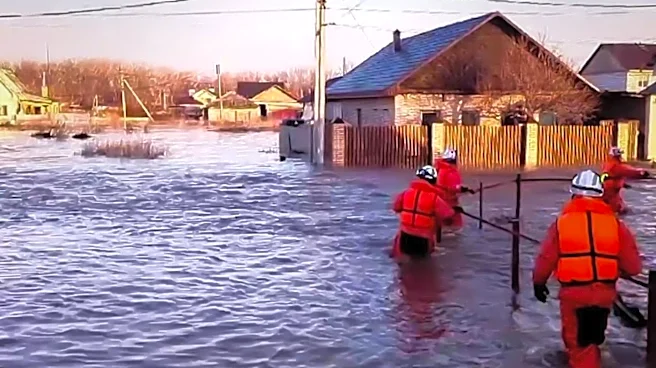
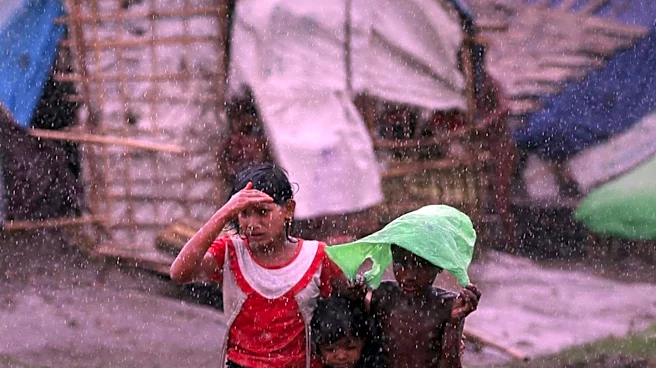
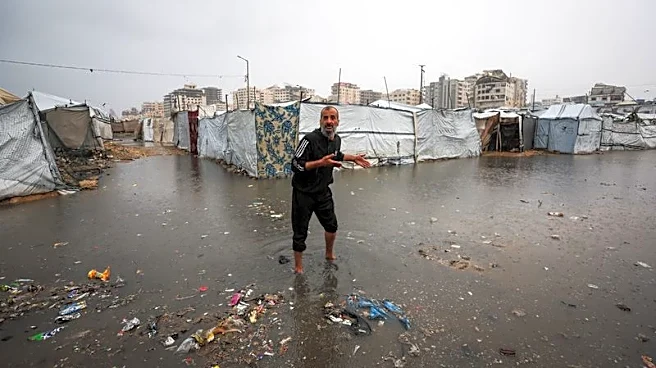
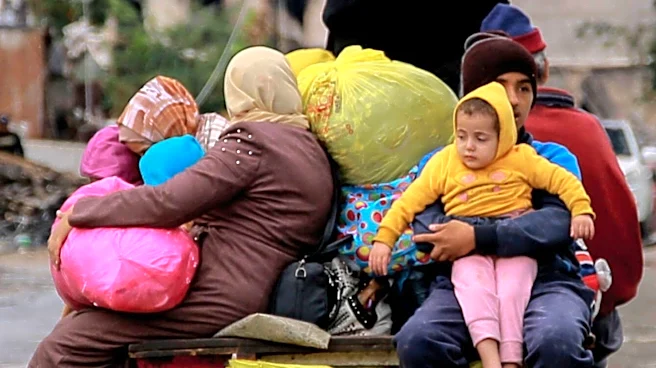
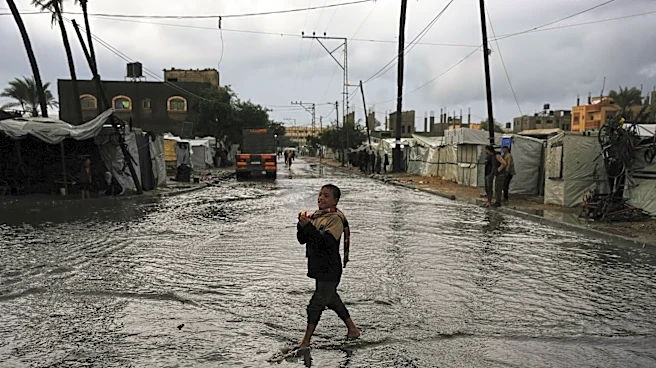
Heavy rainfall has caused severe flooding in Gaza, inundating tens of thousands of tents and exacerbating the already dire shelter crisis for displaced Palestinians. According to Gaza's Government Media Office, over 70,000 tents have been flooded since
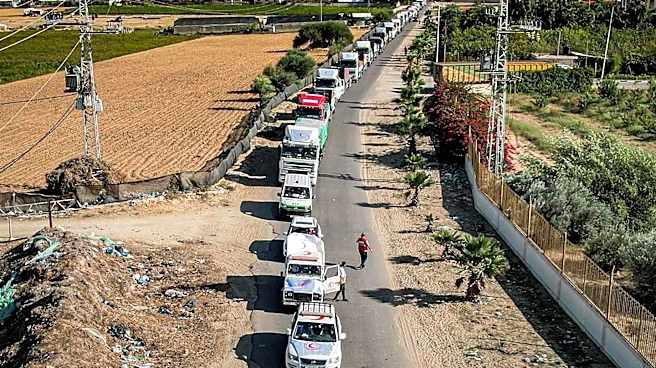
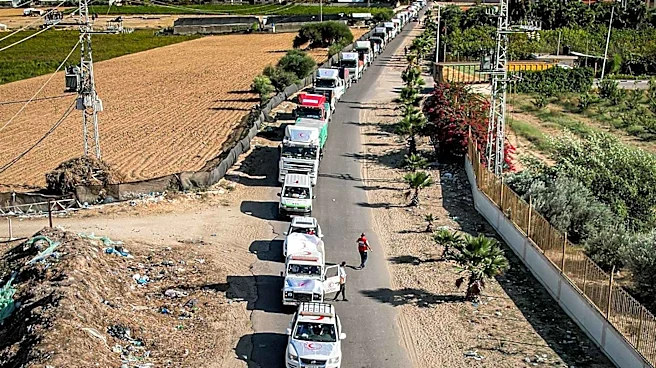
Friday, leaving hundreds of thousands vulnerable. Many families, displaced multiple times since October 7, 2023, are now facing their fourth winter in makeshift shelters. Despite a supposed ceasefire agreement that included provisions for 60,000 mobile homes and 200,000 tents, only 20,000 tents have been allowed into Gaza, and mobile homes remain stalled on the Egyptian border. Israel's restrictions on the entry of goods, including timber and emergency shelter kits, are cited as a primary reason for the lack of adequate housing. The United Nations Office for the Coordination of Humanitarian Affairs (OCHA) reports a significant shortfall in needed tents and tarpaulins.
Why It's Important?
This ongoing shelter crisis in Gaza, intensified by natural disasters, represents a critical humanitarian emergency with severe implications for the health and safety of the displaced population. The inability to provide basic, weather-appropriate shelter, despite a ceasefire agreement, highlights a profound failure in humanitarian aid delivery and international protection mechanisms. The extensive damage to homes and infrastructure means that even those not in tents are vulnerable to harsh weather conditions. The Israeli restrictions on construction materials, citing security concerns, directly conflict with the urgent need for civilian housing and repair. This situation not only causes immediate suffering but also contributes to long-term instability, public health crises, and a deepening sense of despair among Palestinians, potentially fueling further conflict and radicalization. The lack of accountability for ensuring humanitarian access also undermines international law and humanitarian principles.
What's Next?
The immediate priority is to address the urgent need for shelter and winter supplies for the displaced population in Gaza. This will likely involve increased pressure from international humanitarian organizations and governments on both Israel and Hamas to facilitate the entry of essential goods. The Board of Peace has already called for immediate action to allow winterization and humanitarian supplies. Without significant intervention, the humanitarian situation is expected to worsen as winter progresses, leading to increased illness, displacement, and potential fatalities. There may be renewed calls for a more robust and enforceable mechanism to ensure humanitarian access and the implementation of ceasefire agreements. The long-term solution requires addressing the underlying political issues that prevent reconstruction and the establishment of permanent, safe housing for the displaced.
Beyond the Headlines
The recurring flooding and inadequate shelter in Gaza expose the systemic vulnerabilities of a population living under prolonged conflict and blockade. The reliance on temporary tents for years, rather than durable housing, signifies a failure to transition from emergency relief to sustainable recovery. This situation raises ethical questions about the responsibility of all parties involved—Israel, Hamas, and the international community—to protect civilian lives and ensure basic human dignity. The psychological toll on families, particularly children, who have been displaced multiple times and live in constant precarity, is immense and will have lasting consequences. The struggle to bring in essential materials like timber, due to security concerns, also highlights the complex and often intractable nature of balancing security imperatives with humanitarian needs in conflict zones, leading to a perpetual state of crisis for civilians.